
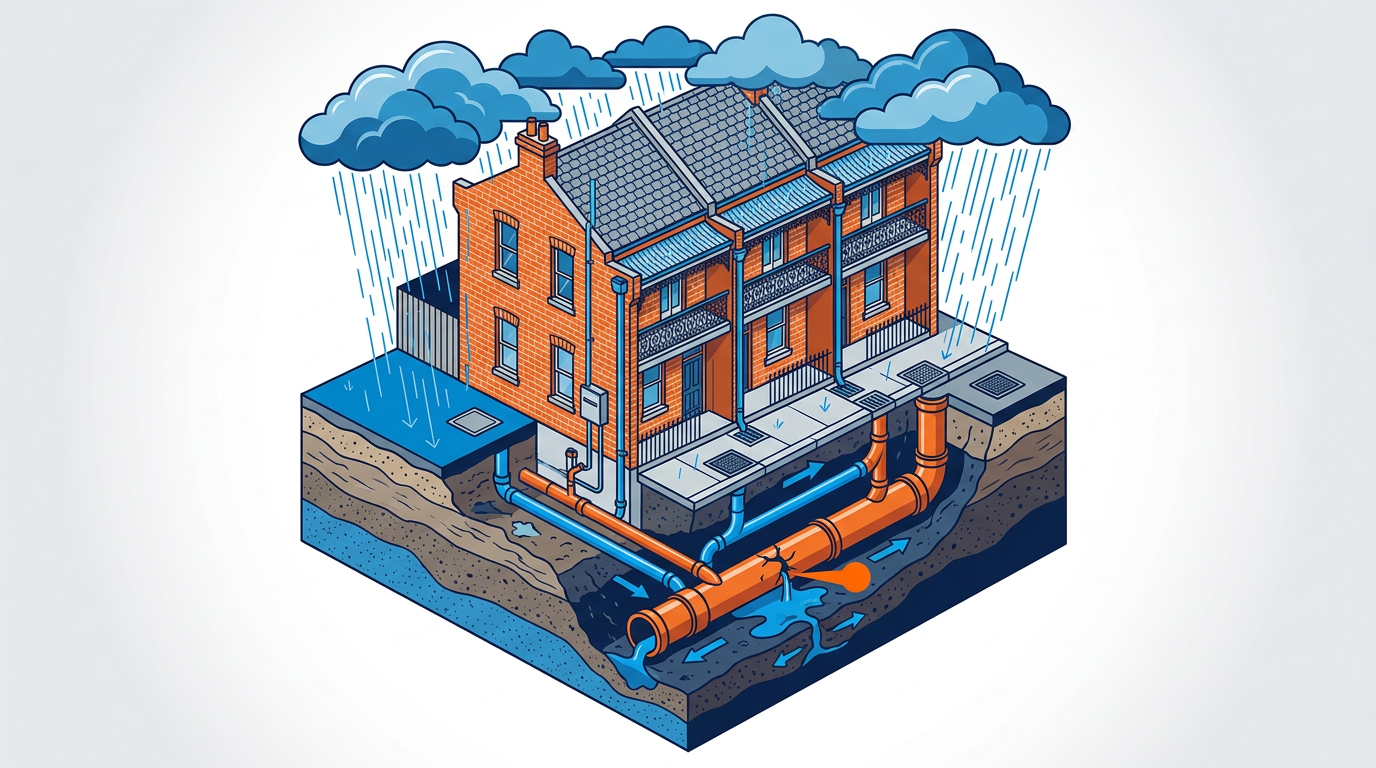
The call usually comes on a Tuesday, two days after the rain stops. A Lane Cove homeowner has sewage staining across the laundry floor, a plumber has told them the line under the driveway has dropped, and the quote has a five figure number on it. The next question is always the same. Will insurance pay for this? The honest answer is that it depends less on the damage you can see and more on what caused it, how quickly it happened, and whether anyone can prove it. Sydney sits on a network of clay pipes laid before most of us were born, under fig roots and driveways and slabs, and insurers know that. Add the higher Sydney Water charges that landed with the October 2025 price determination and a quiet leak now costs you twice, once on the bill and once on the repair. This guide sets out what your policy realistically covers, what it will not, and how to build a claim that stands up.
Why This Matters More in Sydney Right Now
Water is no longer cheap in this city. Sydney Water's prices stepped up from 1 October 2025 and keep climbing across the current determination period, and the usage charge is the part that hurts when something is leaking underground. You can read the current rates on the Sydney Water prices page and compare them against last winter's bill.
August is the worst month to discover the problem. Cold soil moves, clay shrinks and swells after the June and July rain, and root systems from figs, camphor laurels and liquidambars go hunting for moisture in cracked joints. A pipe that coped for forty years fails in a fortnight, and the first sign is often a wet patch in a lawn that has had no rain on it for a week. We see the same streets every August, and the pattern rarely changes.
There is one relief valve most Sydney homeowners never claim. Sydney Water's hidden leak allowance can credit part of the water lost through a concealed leak on your side of the meter, provided the leak was genuinely hidden, you fixed it promptly and a licensed plumber signs off on the work. It is separate from your insurance claim and it does not affect it. Households routinely leave hundreds of dollars sitting there because nobody told them to apply.
- Higher usage rates since October 2025 mean a hidden leak now costs more per day
- Winter soil movement is the peak season for cracked and dropped drain lines
- The hidden leak allowance covers water lost, never the cost of the repair
- You can pursue the allowance and an insurance claim at the same time
The Rule That Decides Almost Every Claim
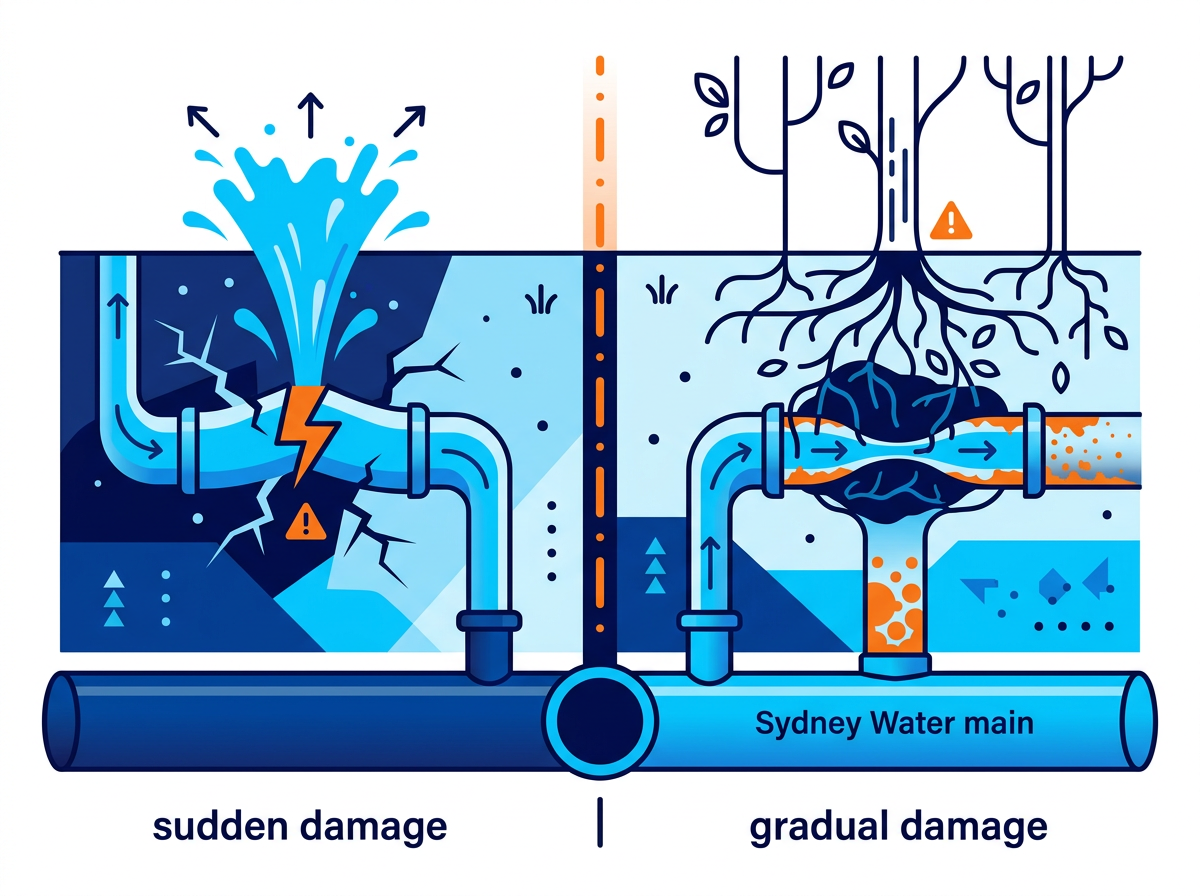
Home insurance in Australia is built to cover damage that is sudden and accidental. It is not built to cover deterioration. That single distinction decides the outcome of most drain claims in Sydney, and it explains why two neighbours with identical pipes can get opposite answers.
A pipe that bursts and floods a bathroom in an afternoon is sudden. A pipe that has been weeping into the soil for three years until the slab moves is gradual, and gradual damage sits in the exclusions of almost every policy sold in this country. The Insurance Council of Australia's General Insurance Code of Practice sets out how insurers must handle and explain those decisions.
Here is the part people miss. Even when the pipe itself is excluded, the damage the water caused is often covered. Insurers commonly pay to lift and replace ruined flooring, dry out a wall cavity and repair a ceiling, then refuse to pay for the length of pipe that failed. Read the escape of liquid section of your product disclosure statement before you assume anything.
- Sudden and accidental damage: usually covered
- Gradual deterioration, rust, corrosion and tree root intrusion: usually excluded
- Resulting water damage to floors, walls and contents: often covered even when the pipe is not
- Lack of maintenance: an exclusion insurers actively look for
What Is Usually Covered
Most standard building policies respond to escape of liquid. If a drain backs up during a storm and sewage comes out of the overflow relief gully and into a garage, that is generally a covered event, and the cleanup and drying are the bulk of the cost. We wrote about how that gully is meant to work in the overflow relief gully guide, because when it does its job it saves the inside of the house.
Sudden collapse also has a path. If a section of line fails without warning and the ground gives way, the excavation to access the damage is often payable under the search and access benefit that sits inside most building policies. That benefit exists specifically so you are not paying to dig up your own driveway to find the fault.
Contents cover picks up the rest. Rugs, a fridge motor sitting in water, storage boxes under a Federation house in Haberfield, and the linen that was in the laundry when the line surcharged. Keep every damaged item until an assessor has seen it or approved disposal in writing.
- Escape of liquid from a burst or surcharging pipe inside the property
- Search and access costs to locate the failure, including excavation
- Drying, dehumidification, antimicrobial treatment and reinstatement
- Temporary accommodation if the home cannot be lived in
- Damaged contents, when contents cover is held
What Almost Never Gets Paid
Tree roots are the biggest single reason Sydney drain claims are declined. Roots do not break a sound pipe overnight. They find an existing crack or a loose mortar joint, thread in as hair roots, then thicken over seasons until the line chokes. An assessor reading a camera report sees that history plainly, and the file is closed as gradual damage. Our guide to tree roots in drains shows what that footage looks like.
Blockages caused by what went down the pipe are also outside cover. Wipes, cooking fat, sanitary products and the slow build of grease in a kitchen line are treated as a maintenance issue, not an insured event, which is the same conclusion we reached in the wet wipes and fatbergs piece.
Then there is the boundary question. If the blockage sits in the Sydney Water main rather than your private line, it is not your claim and not your bill. Sydney Water publishes what it will and will not attend on its wastewater blockages page, and a camera locate is what settles the argument.
- Tree root intrusion and the pipe replacement that follows it
- Blockages from wipes, grease, hair, nappies and building debris
- Wear, rust, corrosion and pipes at the end of their service life
- Damage from work done by an unlicensed person
- Faults in the Sydney Water main, which are the utility's responsibility
Evidence Is the Whole Game
Insurers do not decide on your description of events. They decide on documents. The single most useful document in a Sydney drain claim is a dated CCTV report with metre marks, a locate on the surface and a plain written opinion of the failure mechanism.
That report needs to say what happened, not just what is there. There is a real difference between a pipe with a fracture consistent with recent ground movement and a pipe with long term root ingress and scale. Both look like a blocked drain from the kitchen sink. Only one gets paid. Our CCTV drain inspection cost guide explains what a proper report should include.
Photograph everything before anyone touches it. Wide shots of the room, close shots of the water line on the skirting, the meter reading, and the outside surface where the ground has slumped. Timestamps matter. A claim built two weeks later from memory is a claim that gets questioned.
- Dated CCTV footage with a written condition report
- Photos of the damage before cleanup begins
- Meter readings before and after the repair for the leak allowance
- The licensed plumber's invoice and licence number
- A copy of the recent bill showing the usage spike
How to Run the Claim, Step by Step
Order matters. Make the property safe first, then notify, then repair. Homeowners who fix everything before lodging often lose the claim because the evidence went into a skip bin.
Do the emergency work that stops further damage and keep the receipt. Every policy expects you to prevent loss getting worse, and most reimburse reasonable make safe costs. Turning off the water at the meter is usually the first step, and if the water is not clean, keep people and pets out of the affected rooms.
If the insurer says no and you disagree, there is a process rather than a dead end. Ask for the decision in writing with the specific policy clause, request the assessor's report, then use the insurer's internal dispute resolution. If that fails, the Australian Financial Complaints Authority at afca.org.au reviews the matter free of charge for consumers. A second independent CCTV opinion has overturned more than a few declines.
- Stop the water and make the area safe
- Photograph and video the damage before any cleanup
- Call your insurer and get a claim number the same day
- Book a licensed drainer for a CCTV report and written cause opinion
- Keep every invoice, including cleaning and drying
- Lodge the Sydney Water leak allowance separately once repairs are signed off
Renters, Landlords and Strata in NSW
The responsibility depends on who caused the failure. A tenant who puts fat and wipes down a Newtown kitchen sink can be asked to pay for the clear. A landlord owns the pipe and owns the consequences of it deteriorating, and that is a repair obligation rather than an insurance windfall. We set out the split in the tenant or landlord guide.
Strata changes the map again. In most apartment blocks the drainage inside your lot is yours and the shared line is common property covered by the owners corporation's building policy. That policy has its own excess and its own strata manager approvals, so the timeline is longer. NSW Fair Trading explains the split in its strata and community living material.
Landlord policies deserve a specific mention. They often add loss of rent cover when a property becomes unliveable, which can be worth more than the repair itself. If the property is tenanted, tell your property manager on day one so the paperwork is consistent across both files.
- Tenant caused blockages: usually the tenant pays for the clear
- Ageing or damaged pipework: the owner's responsibility to repair
- Common property lines: the owners corporation policy responds
- Loss of rent cover is worth checking on landlord policies
Relining, Replacement and What Insurers Will Fund
When a claim is approved, insurers pay to restore what was there, not to upgrade it. That principle shapes the repair method. A short structural liner across a fractured section is usually accepted because it returns the pipe to a serviceable state at a lower cost than excavation.
Full length relining of a house line is a different conversation. If half the run is sound, expect the insurer to fund the failed section and leave the rest to you. That is not unreasonable, but it is worth getting a quote that separates the two so the covered portion is clear. Our pipe relining versus replacement comparison sets out where each method makes sense.
Whatever method is used, the work must comply. Drainage work in NSW must be done by a licensed plumber to the standards referenced by the Plumbing Code of Australia, and a compliance certificate is what the insurer, and later a buyer, will ask to see.
- Spot repairs and section liners are the usual approved fix
- Betterment is not covered, so upgrades come out of your pocket
- Get quotes that itemise the failed section separately
- Keep the compliance certificate with your property records
Cutting the Odds of a Decline Next Winter
The cheapest claim is the one you never lodge. A camera inspection every two to three years on an older Sydney property gives you a dated record of pipe condition, and that record is exactly what proves a later failure was sudden rather than long running. Keep the report as a PDF with the rest of your property paperwork so you can produce it the day something goes wrong.
Maintenance also removes the insurer's easiest reason to say no. A jetted line, a cleared gully and a documented root cut show a property that has been looked after. If you are buying, get the drains looked at before contracts, which is the argument we make in the pre purchase drain check guide.
Read your own policy once a year, ideally before the storm season. Look for the escape of liquid wording, the search and access limit, the excess and any specific exclusion for gradual water damage. Fifteen minutes now is worth more than any argument later. Moneysmart's guidance on home insurance is a plain English place to start.
- CCTV inspection every two to three years on pre 1980 properties
- Jet the kitchen and main line before winter, not after a backup
- Trim and monitor trees planted over drainage runs
- Photograph the meter monthly so a leak shows up early
- Review the escape of liquid clause each renewal
Need a CCTV report your insurer will accept?
Express Drain Cleaning provides same-day drain clearing across Sydney, Newcastle and the Central Coast. Licensed, insured, upfront pricing.