
Pipe Relining vs Replacement: The Best Choice for Your NSW Property
Whether you are dealing with a recurring blockage in a Federation-era terrace in Inner West Sydney or managing cracked clay pipes in an older Newcastle cottage, the choice between pipe relining vs replacement is one of the most significant decisions a homeowner can make. Both methods have their place in modern Australian plumbing, but the right choice depends on more than just the price tag. Understanding the costs, lifespan, and logistical constraints of each method is essential for protecting your property and your wallet.
The Modern Approach: What is Pipe Relining?
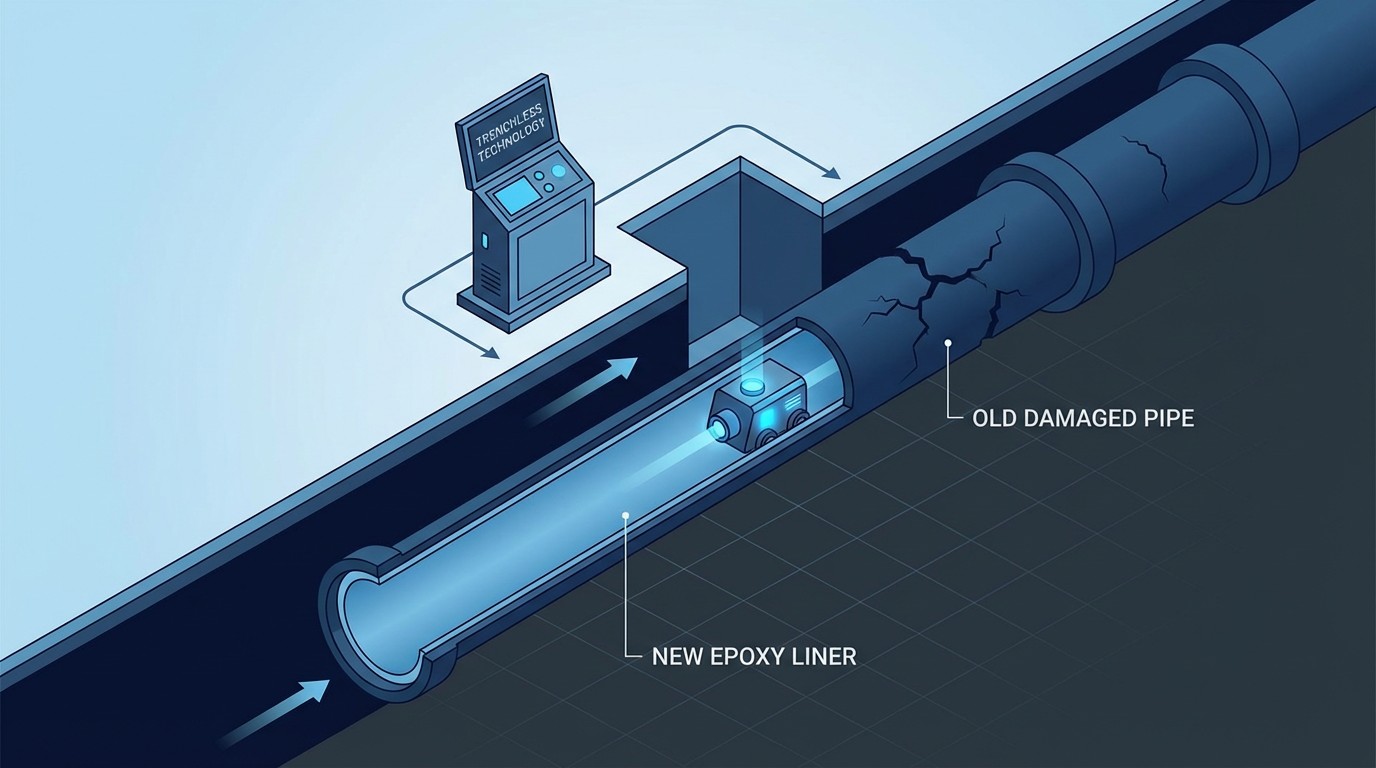
Pipe relining, often referred to as 'trenchless' or 'no-dig' technology, involves creating a new pipe inside your existing damaged one. In suburbs like Strathfield or The Hill in Newcastle, where deep-rooted Eucalyptus and Jacaranda trees frequently infiltrate old earthenware pipes, relining has become the go-to solution. A flexible textile liner impregnated with epoxy resin is inserted into the drain and inflated. Once cured, it forms a structural, seamless sleeve that is virtually impervious to tree roots.
This method is particularly valuable for Sydney properties with limited access. If your sewer line runs directly beneath a tiled outdoor entertaining area, a landscaped garden, or the structural footings of your home, relining allows you to fix the leak without swinging a sledgehammer. Because it uses the existing pipe as a host, there is no need to tear up your driveway or disrupt the nature strip.
The Traditional Choice: When Full Pipe Replacement is Necessary
Traditional replacement involves excavating the old pipe and laying new PVC piping. While it sounds invasive, it remains the industry standard for a reason. If a pipe has completely collapsed or shifted so severely that a camera cannot pass through (a common issue in the reactive clay soils of Western Sydney or the flood-prone stretches of the Central Coast), relining is physically impossible.
Replacement is also the logical choice for shallow pipes located in easily accessible areas. If your damaged drain is only 300mm underground in a patch of lawn, the cost of a mini-excavator and a few lengths of PVC will almost always be lower than the specialised resins and equipment required for relining. Furthermore, if you are planning a major renovation or extension, replacing the entire line ensures the plumbing is relocated exactly where the new site plan requires it.
Comparing Costs: Relining vs Replacement in NSW
Budgeting for drainage work requires an understanding of both the upfront quote and the 'hidden' restoration costs. In NSW, the following price ranges are typical for residential projects:
Pipe Relining: Expect to pay between $400 and $900 per linear metre. While the 'per metre' rate is higher than PVC pipe, you avoid the costs of replacing expensive sandstone pavers, retipping concrete driveways, or hiring landscapers to fix the garden. Total jobs often range from $3,500 to $12,000 depending on the length and diameter.
Pipe Replacement: The plumbing work itself might only cost $200-$400 per metre, but the excavation and restoration can double or triple that. If the pipe is 2 metres deep under a structural slab in Sydney’s Eastern Suburbs, the excavation costs alone can be astronomical. However, for a simple garden dig, replacement is usually the cheaper path.
Lifespan and Regulatory Compliance
When evaluating pipe relining vs replacement, you must consider the long-term durability. Modern PVC pipes used in replacements have a lifespan of over 50 years. Similarly, high-quality Brawoliner or similar epoxy systems used in relining are engineered to last a minimum of 50 years, often backed by a 35-year product warranty. In many ways, a relined pipe is stronger than the original, as it has no joints for roots to enter.
In Sydney and Newcastle, all drainage work must comply with AS/NZS 3500 plumbing standards. You must also be aware of the 'Boundary' rule. Sydney Water and Hunter Water are generally responsible for the main sewer line, but the homeowner is responsible for everything from the house to the 'jump-up' or property connection point. Navigating these rules requires a licensed plumber who can provide a Certificate of Compliance and ensure that stormwater is not illegally diverted into the sewer system—a major focus for councils on the Central Coast during heavy rain events.
Not sure if you need a patch or a full replacement? Get an expert drain inspection today.
Express Drain Cleaning provides same-day drain clearing across Sydney, Newcastle and the Central Coast. Licensed, insured, upfront pricing.