

Sydney Winter Drain Failures in 2026: Why June to August Breaks the Most Pipes (and How to Stay Ahead of It)
Walk past any cafe in Glebe, Crows Nest or Newtown after a June downpour and you will hear the same story: a backed up kitchen sink before opening, a gully trap surcharging onto the courtyard, a toilet that gurgles every time the rain picks up. Sydney winters are not Melbourne winters. We get short, sharp East Coast Lows, soaked clay soils that swell against old earthenware pipes, and weeks of leaf fall from London planes and liquidambars dropping straight into stormwater pits. The Bureau of Meteorology's long-run rainfall record for Observatory Hill shows June is one of the wettest months of the year for the Sydney CBD, averaging around 132 mm. That water has to go somewhere, and when your drains cannot move it fast enough, the damage shows up inside the house. This guide is for Sydney homeowners, strata committees and small business owners who want to understand exactly why winter is the worst season for drain failures in 2026, what to check on their own property this month, and when to call a licensed drainer before a small problem becomes a five-figure repair.
1. Why Sydney's Winter Triples Your Risk of a Drain Failure
Winter in greater Sydney does three things to underground drainage at once, and the combination is what turns small flaws into full blockages. Heavy, sustained rain saturates the soil profile, sometimes for weeks. Cooler ground temperatures cause clay and reactive soils to contract slightly around buried pipes, opening up old joints. Native and exotic trees push roots harder toward any water source they can find, and a leaking pipe joint is the easiest target on the block.
Pair that with the season's leaf load. Liquidambars in the Inner West, London planes lining the streets of Kirribilli, Mosman and Hunters Hill, and the constant fine leaf drop from coastal banksias and eucalypts all end up in your gutters, downpipes and pit grates. Once a pit is choked, the system backs up under the next storm and pressure builds in places it was never designed to hold. That pressure is what cracks a brittle 60 year old earthenware line, lifts a slipped joint, or pushes wastewater up through the lowest gully in the yard.
On older properties, the issue compounds quietly across the season. A pipe that handled summer flows fine because the system never had to work hard can fail the first time it sees a full week of saturated ground. By the time the homeowner notices a slow drain or a damp patch, the failure has often been developing since May.
2. The Five Drain Failures That Spike Across Sydney Every Winter
Across our service runs from the Northern Beaches to the Central Coast and the Hunter, the same five failure types climb sharply between late May and early September. If you know what they are, you know what to inspect before they hit you.
- Root intrusion at clay pipe joints. Sydney's leafy belt from Roseville to Wahroonga sits on the network of original vitrified clay sewer lines that knit together with mortar collars. Cool, wet soil drives Eucalyptus, Camphor Laurel and Liquidambar roots straight to those joints. Once a single hair root enters, it fans out into a fibrous mass within months. Read more on how tree roots get into Sydney drains.
- Stormwater pit and pipe blockages. Leaves, silt and bark from a single big storm can choke a 100 mm stormwater line in one afternoon. Backyards in Lane Cove, Forestville and on the Central Coast routinely flood from one blocked surface pit, not a system fault. Our stormwater drain repair service clears most of these in a single visit.
- Collapsed or deformed lateral sewer lines. Saturated clay soils swell and shrink with each rain cycle, which puts cyclic load on aged pipes. Suburbs built before 1970 (Marrickville, Hamilton, Stanmore, Cooks Hill) are the most exposed. A camera inspection shows the failure point in minutes.
- Grease and FOG (fats, oils, grease) blockages in apartment stacks. Cold weather solidifies grease in vertical sewer stacks fast. Strata blocks in Bondi, Zetland and Wollstonecraft see the steepest spike in shared line blockages between June and August because units cook more and pipes run colder.
- Surcharging gully traps and overflow relief gullies (ORGs). When a downstream main blocks, the ORG outside your property is the safety valve. It dumps raw sewage in your yard instead of inside your house. If yours has triggered, do not hose it back down the grate. Stop using fixtures and call a licensed drainer.
3. Suburb-by-Suburb Risk Map: Where Failures Cluster in Sydney's Cold Months
Drain risk in Sydney is not evenly spread. It clusters tightly by housing age, tree canopy, soil type and proximity to coastal sand or shale. Knowing your suburb's profile is half the prevention.
Inner West and Eastern Suburbs (Newtown, Erskineville, Bondi, Randwick): mostly Federation and inter-war terraces with original earthenware sewer laterals. The single biggest risk is root intrusion at mortar joints, followed by collapsed sections under added concrete patios and pool surrounds. Most failures here are repaired with trenchless pipe relining rather than excavation.
Lower and Upper North Shore (Mosman, Lane Cove, Pymble, Wahroonga): heavy tree canopy combined with sandstone and shale outcrops. Roots and pipe deformation are the leading causes. Stormwater pits choked by gum leaves and bark account for most winter callouts.
Northern Beaches (Manly Vale, Forestville, Belrose, Avalon): sandy soils that scour the inside of stormwater pipes, plus salt-air corrosion of older galvanised components. Boundary trap silt build-up is the common winter trigger.
Central Coast (Gosford, Terrigal, Lake Haven, Wyong): high water table, sandy loam and frequent intense rainfall. Stormwater backflow into yards is the dominant winter problem, often paired with cracked PVC under driveways.
Newcastle and the Hunter (Hamilton, Mayfield, Wallsend, Charlestown): mixed terracotta and PVC vintages with significant industrial-era infrastructure. Strata blocks in Cooks Hill and The Hill see grease and FOG events early in winter.
If you are not sure which profile fits your street, the easiest starting point is to check the suburb pages under our Sydney, Newcastle and Central Coast service areas for local risk notes and typical pipe materials.
4. The 12-Point Winter Drain Health Check for Sydney Homes
You can do most of this list in an hour on a dry Saturday morning. None of it requires a licence. What it gives you is a clear before-the-storm baseline, so anything that changes after the next East Coast Low is obvious.
- Clear every gutter and box gutter of leaf litter, even on the shaded side of the roof.
- Lift each stormwater pit grate in the yard and remove silt down to the pipe invert.
- Run a hose into the highest stormwater pit on the block for two minutes and watch the lowest pit. Water should arrive within thirty seconds.
- Check that downpipes are still seated in their stormwater adaptors. Winter wind moves them more often than people expect.
- Lift the boundary trap riser cap (the round cover usually near the front fence) and check the trap is half full of clear water, not silted up or dry.
- Find your overflow relief gully (the open grate at ground level, lower than every internal fixture) and confirm it is not covered by mulch, pots or paving build-up.
- Flush every toilet in the house and listen for gurgling at basins and the kitchen sink. Gurgling means the vent system or the line is partly blocked.
- Run the laundry on a full cycle and watch the gully outside. A bubble or surcharge is a warning, not normal.
- Inspect any visible inspection openings (IOs) for damaged caps or signs of seepage at the surface.
- Walk the side passage after the next overnight rain and look for permanent damp patches above where the sewer line runs.
- Trim back any tree branches sitting within two metres of the roof to reduce direct leaf load on gutters.
- Note where water pools on the lawn for more than two hours after rain. That is your slow drainage zone, and the first place to investigate next time a fixture backs up.
5. What Sydney Water and Your Council Are (and Aren't) Responsible For This Winter
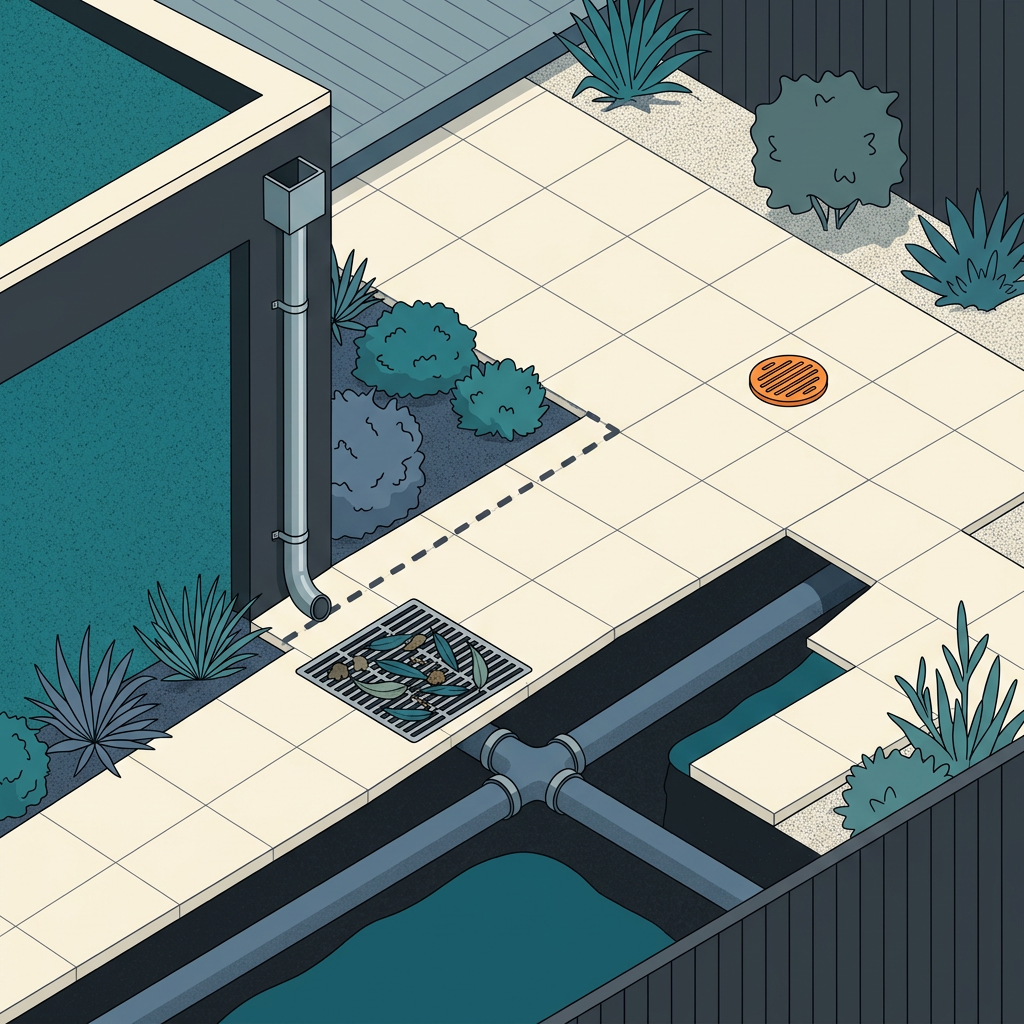
This is where most Sydney homeowners get a nasty surprise after a winter overflow. Sydney Water owns and maintains the main sewer in the street, plus the connection point to your property. Everything from that connection point to your fixtures, including the boundary trap, the inspection openings and every metre of lateral pipe under your yard, is your responsibility as the property owner. The same split applies to Hunter Water customers in Newcastle and the Lower Hunter, and to most Central Coast Council areas.
Stormwater is different again. Local council typically owns the pit in the street and the line under the road, but the pit on your property, the line from the house to the kerb, and any private easement pipe across the back of the block are yours. If your neighbour's stormwater runs through an easement on your land and that pipe blocks, the maintenance obligation usually sits with the benefiting owner, but the access obligation sits with you. Sydney Water's own guidance on customer responsibilities is set out on the Sydney Water Your Home portal.
When wastewater surcharges from your overflow relief gully and reaches a waterway, a gutter or a stormwater pit, you are required to report it. The NSW Environment Protection Authority's pollution information sets out the obligation, and the EPA's contact and reporting page lists the 24 hour Environment Line for live incidents.
If you are renting in Sydney during winter, the responsibility for clearing a blockage caused by tenant misuse versus tree roots or pipe failure is governed by the NSW rental rules. The clearest summary sits on the NSW Government's connection and supply of water page.
6. Warning Signs Your Drain Will Fail Before the Next East Coast Low
Drain failures rarely arrive without notice. The signs are subtle for weeks, sometimes months, and most homeowners only connect them after the event. If you spot any two of the following in the same week, do not wait.
- Slow drainage from any fixture that used to clear in seconds, especially showers and laundry tubs.
- Gurgling from one fixture when another is used, particularly a basin gurgling when a toilet flushes.
- A damp, sour smell near the side passage or rear gully, worse on still mornings.
- Patches of unusually lush, dark green grass directly above the sewer run.
- Water marks or hairline cracks appearing on internal walls where the pipe stack runs.
- Bubbles at the gully when the washing machine pumps out.
- Standing water in a stormwater pit twenty minutes after the rain stopped.
- A sudden spike in your Sydney Water bill that does not match a tap or toilet you can identify. Sydney Water's hidden leak allowance may apply once the leak is fixed.
7. When DIY Stops and a Licensed Drainer Starts
Surface work, gutter clearing, grate lifting, and a hose-and-bucket test of your stormwater pits are all fine for a confident homeowner. Past that, the law in NSW is clear. Any work on a sanitary drain (the pipe carrying wastewater from your fixtures to the sewer main, including the boundary trap) must be done by a licensed plumber or drainer. The licensing framework is administered by NSW Fair Trading's plumbing and drainage program, and unlicensed work can void your home insurance.
The technical work itself is also governed by the plumbing code. AS/NZS 3500 covers everything from pipe gradients to vent placement, and forms part of the National Construction Code administered by the Australian Building Codes Board. A repair that does not comply with the code can fail a future sale inspection and may not be covered by warranty.
On a typical winter callout in 2026, a licensed drainer will start with a CCTV drain camera inspection to confirm the failure point, then choose the right tool. For root masses and grease, that is usually high-pressure drain jetting with a root-cutting nozzle. For a collapsed or fractured section under a driveway or garden, it is usually trenchless pipe relining rather than excavation. For a fully surcharged system at 11 pm, it is a 24/7 emergency drain service to stop the damage before morning.
If you want a sense of what those services usually cost in 2026, our break-down of CCTV drain inspection pricing and the seasonal stormwater maintenance guide for NSW homes cover the typical ranges.
8. The Insurance, Bond and Hidden Cost Reality of Ignoring Winter Drain Issues
Most Sydney home insurance policies cover sudden and accidental damage from a burst pipe or storm surcharge. Almost none cover gradual damage, lack of maintenance, or wear and tear. That distinction is the one homeowners lose on after a winter event. If your insurer's assessor sees a sewer line clogged with three years of root growth, the surcharge is not sudden, it is the predictable result of a deferred repair. The claim is often declined.
For investment owners and strata, the cost picture is worse. A single ground floor unit damaged by a surcharging shared stack can run $15,000 to $40,000 in restoration, plus loss of rent and a strata insurance excess that can sit at $5,000 or higher per claim. Documenting an annual winter inspection and any preventative jetting work is what shifts those events from contested claims to covered ones.
Tenants on a standard NSW residential lease are usually not liable for tree root damage or aged pipe failure. They are usually liable for blockages caused by foreign objects (wipes, sanitary products, fat poured down the sink). A camera inspection that shows root mass at a 1970s clay joint is what protects a tenant's bond from an unfair deduction.
The hidden cost most owners miss is the structural one. A leaking sewer or stormwater line under a slab can soften the bearing soil enough to cause settlement cracks in brickwork over a single wet winter. Repairing the cracks without finding the leak buys you twelve months. Finding and fixing the leak first is the difference between a $2,000 drainage repair and a $30,000 underpinning job.
9. A Realistic Winter Action Plan for Sydney Property Owners in 2026
If you take one set of actions from this guide this June, make it this short list. Book a CCTV drain inspection on any property older than thirty years that has never had one. Clear every stormwater pit and gutter on the property before the next forecast East Coast Low. Note the location of your boundary trap and your overflow relief gully so you can identify a surcharge fast. Save the number of a licensed local drainer who runs an after-hours service. If you are in a strata block, ask the committee for evidence of the last preventative jetting service on the shared sewer stack, and the date of the next one.
Doing those five things turns winter from the season your drains fail into the season you confirm they will not.
If you want a structured starting point, treat this June as your annual baseline. Photograph each stormwater pit before and after clearing, save the CCTV footage from your inspection to a folder you can share with future contractors or buyers, and write down the date of any jetting or repair work on a single page kept with your property records. Sydney's housing stock is ageing faster than its drainage infrastructure is being renewed, so the owners who keep clear records of what is underground are the ones who avoid the worst surprises during a 2027 wet season, a council easement dispute, or a future sale. Drainage is the part of the house nobody sees until it fails, and a small amount of attention this winter is the cheapest insurance policy you can buy for the next decade of ownership.
Stop a Winter Drain Failure Before It Damages Your Home
Express Drain Cleaning provides same-day drain clearing across Sydney, Newcastle and the Central Coast. Licensed, insured, upfront pricing.