
Stormwater vs Sewer in Sydney: Where Your Pipes Go
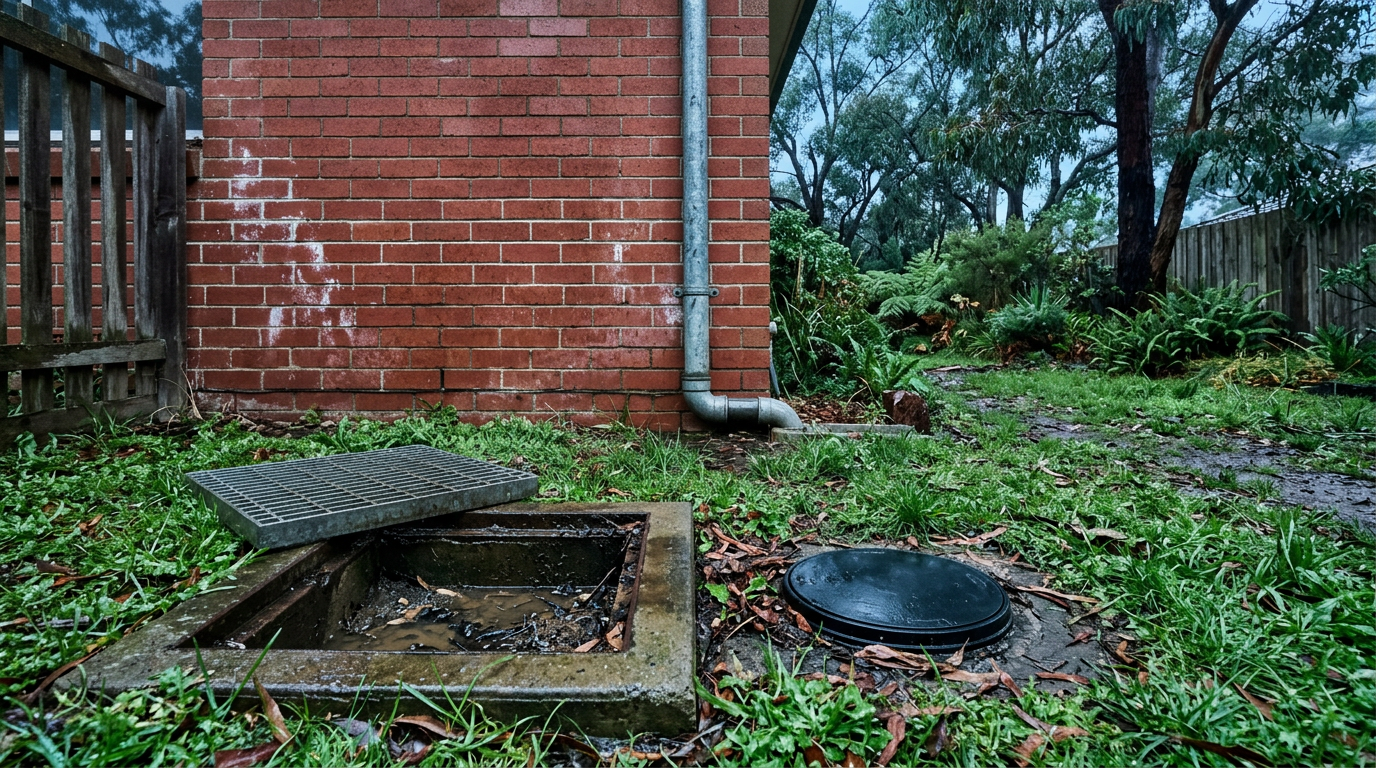
Walk down any street in Marrickville, Ryde or Willoughby the morning after a proper east coast low and you can pick the problem houses without knocking on a door. One yard has water sheeting across the lawn toward the back fence. Another has a grate quietly gulping and burping under the downpipe. A third smells faintly of sewage where it should smell like wet soil. All three are telling you the same thing: the stormwater and the sewer are not doing the separate jobs they were built to do. Sydney runs two completely different underground networks under the same suburbs, and most homeowners have never been shown which pipe in their yard belongs to which. That confusion turns expensive fast in spring, when the ground is already saturated and the next front rolls through before the last one has drained away. This guide explains what runs where, how the two systems end up wrongly joined, what it costs you, and how a drainer actually proves it.
Sydney Runs Two Separate Pipe Networks Under the Same Street
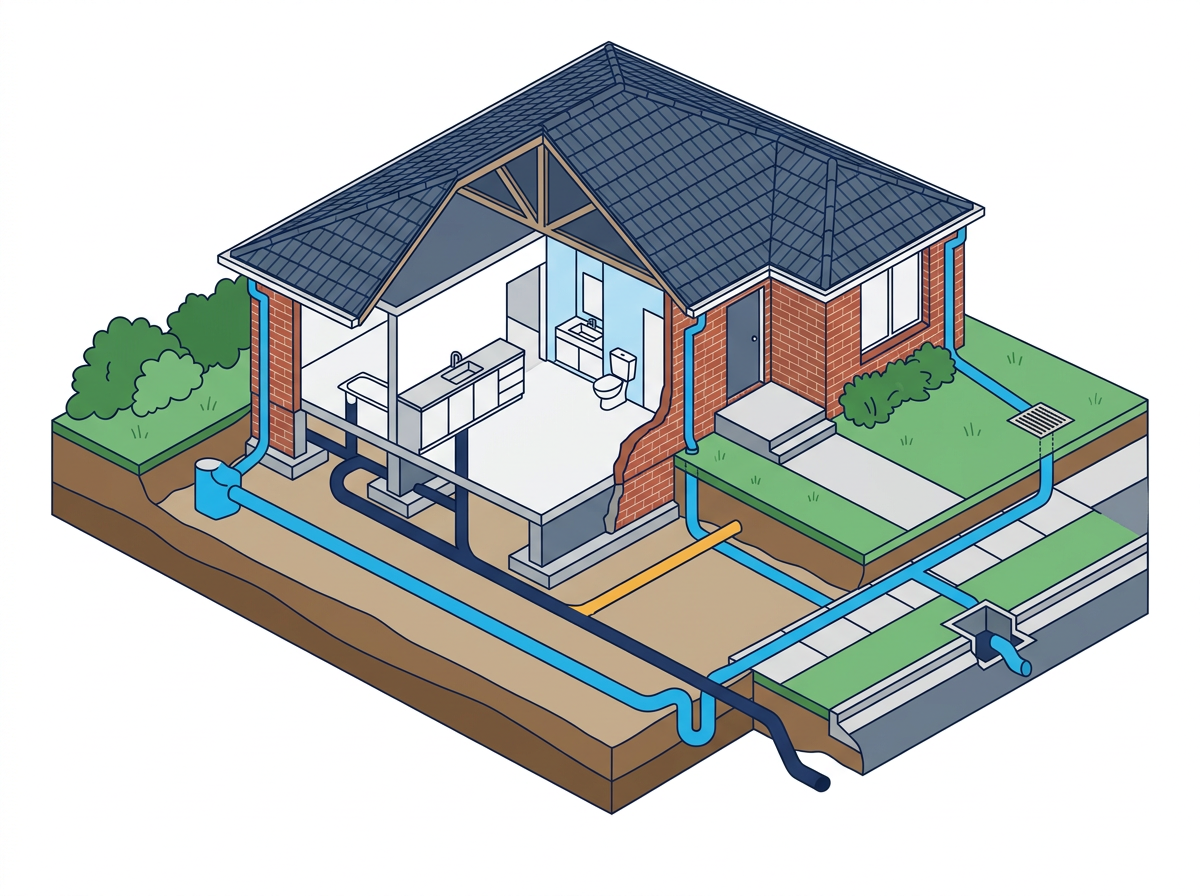
Your sewer takes everything from inside the house. Toilets, showers, kitchen sink, laundry tub, dishwasher. It runs from your fixtures to a boundary trap or a junction at the property line, then into a Sydney Water wastewater main and eventually to a treatment plant at Malabar, Bondi or North Head.
Your stormwater takes only rain. Roof water down the downpipes, surface water off paving, and whatever the yard grates collect. In most of Sydney it discharges to the kerb and gutter out front, or into a council stormwater pipe, and from there straight to a creek, the harbour or the ocean. No treatment. Nothing filters it.
That second point is the one that surprises people. Anything that reaches your stormwater pit reaches the waterway more or less unchanged, which is why the NSW EPA treats stormwater pollution seriously and why councils fine for it. Sydney Water's own guidance on wastewater and property drainage is worth reading before you assume the grate near your clothesline is harmless.
- Sewer: all indoor waste, treated before release, Sydney Water asset past the boundary
- Stormwater: rain and surface runoff only, untreated, usually council or private asset
- Boundary trap: the changeover point where your sewer responsibility ends
- Stormwater pit: an inspection and silt collection point on your private line
How Downpipes End Up in the Sewer
Almost nobody sets out to join the two systems. It happens through decades of small decisions made by people who were not drainers. A carport gets added in 1978 and the builder finds a convenient pipe to tie the downpipe into. A bathroom renovation reroutes a floor waste and the old line gets capped at the wrong end. A gardener installs a new agi line, hits an unmarked pipe, and joins into it because water goes away when they test it.
The reverse happens too, and it is worse. A laundry tub or a second toilet in a garage conversion gets connected to what the owner thought was the sewer, when it was actually the stormwater line running to the kerb. That property is now discharging raw wastewater to the harbour every wash cycle.
Older suburbs carry the most risk. Anything built before the 1970s has usually been altered three or four times, and the paperwork rarely survived the sale. If your house sits in Balmain, Cooks Hill, Hamilton or the older parts of Gosford, assume nothing about where a pipe goes until it is proven.
Strata and duplex properties add another layer. Shared lines mean one owner's illegal connection surcharges everybody else's bathroom, and the repair sits with the owners corporation rather than the unit that noticed the smell. If you are in a block of six in Cremorne or Merewether, get the whole line camera checked at once rather than paying for six separate call-outs over three years.
The Signs You Have a Cross-Connection
A misconnection rarely announces itself. It hides until rainfall is heavy enough to overwhelm the pipe that is doing double duty. That is why so many owners first notice it in August and September, when a wet front lands on ground that never dried out from the last one.
You are looking for symptoms that only appear in the rain, or only appear when a fixture runs. Both patterns tell a drainer something different, so note which one you have before you call.
- Your overflow relief gully lifts and spills during heavy rain but never at other times
- Toilets gurgle when it rains, which means stormwater is loading the sewer line
- A stormwater pit smells of sewage, or has grey scum and lint around the walls
- Water rises in a yard grate when the washing machine drains
- Downpipes back up and overflow at the top even though the yard grates look clear
- A neighbour's driveway floods only when your gutters are running
What a Wet Spring Does to a Misconnected Property
Roof water arrives fast. A modest Sydney roof of around 150 square metres sheds thousands of litres in a single afternoon storm, and it all wants to leave in about twenty minutes. Sewer lines were never sized for that. They were sized for a family of four using taps and toilets.
When that surge enters a 100mm sewer branch, the line surcharges. Pressure has to escape somewhere, and by design it escapes at the lowest fitting outside, which is your overflow relief gully. If the gully has been paved over, buried in garden bed mulch or replaced with a sealed cover by a previous owner, the pressure finds the next weakest point instead. That is usually a shower floor waste or the toilet inside the house.
The Bureau of Meteorology's seasonal outlooks are worth watching if you have had a gurgle you cannot explain. A wetter than average spring turns a tolerable fault into a repeated indoor overflow, and the clean-up after sewage enters a bathroom costs far more than the drainage repair would have.
There is a health angle too. Water that has surcharged through a sewer line and spread across a lawn is not clean rainwater, and children and pets should be kept off it until the yard has been hosed down and dried out. If the overflow reached inside the house, carpet and underlay need replacing rather than drying, and most insurers will ask for a plumber's report before they will look at the claim.
What It Costs You on the Bill
Water pricing in NSW has moved sharply, and the current Sydney Water price path pushes typical household bills well above where they sat two years ago. Fixed service charges, usage charges and stormwater drainage charges all sit on the same bill, so a property with a drainage fault is now paying more for the privilege of the problem than it was in 2024.
The part most owners miss is the Hidden Leak Allowance. Sydney Water can credit part of the water lost through a concealed leak, but the conditions are specific. The leak has to have been genuinely hidden, you have to have repaired it with a licensed plumber, and you have to apply with evidence inside the eligibility window. It is not a blanket refund and it does not cover a tap you left running.
This matters for cross-connections because a leaking or broken line inside the property is exactly the kind of fault that both wastes water and shows up as a spike. Keep the invoice, keep the CCTV footage, and lodge the claim. Owners who repair first and think about the paperwork later routinely miss out on money they were entitled to.
Repair costs themselves have not moved as much as the water bill. A pit repair or a re-routed downpipe usually sits in the low hundreds. A structural fix on a collapsed section through pipe relining runs from around $450 per metre, with the exact figure set by pipe diameter, depth and access.
How We Prove Which Pipe Is Which
Guessing is what created the problem in the first place, so we do not guess. Three techniques do almost all the work, and on most jobs we use two of them together.
Dye testing is the fastest. We drop a non-toxic dye into a fixture or a downpipe and watch which outlet it surfaces at. If dye from a roof downpipe appears at the boundary trap, the connection is wrong and we have proof you can show a certifier or a council officer.
A CCTV drain inspection tells you the rest. We can see the join itself, the pipe material, the condition of the walls, and whether roots or a collapse are involved. That footage is what turns a suspicion into a quote with a fixed scope.
Where a line is buried under a slab or a driveway, we add sonde location so we can mark the route on the surface accurately before anyone picks up a shovel. A Sydney Water sewer service diagram is a useful cross-check, and you can order one through their diagrams and prints service, though on altered properties it often shows the original layout rather than what is actually in the ground.
Fixing It Properly, Not Just Clearing It
Clearing a blockage on a misconnected line buys you one dry storm. The fault comes straight back because the cause was never the debris, it was the geometry.
The permanent fix depends on what the camera found. A wrongly joined downpipe that feeds a blocked stormwater drain usually gets cut out and re-run to the correct stormwater line, which is a half-day job on most suburban blocks. A cracked or root-invaded section can be sealed from the inside with no-dig pipe relining, which avoids digging up a paved courtyard or a mature garden. A collapsed pit gets rebuilt with a proper silt trap so the next decade of leaf litter has somewhere to sit.
Whoever does the work should be licensed for drainage, not just general plumbing, and the finished job needs to comply with the Plumbing Code of Australia provisions that apply in NSW. Ask for the licence number before work starts. NSW Fair Trading lets you check it in under a minute.
One more step people skip: a high-pressure jetting clean of the corrected line before sign-off. There is no point re-routing a downpipe into a stormwater pipe that is already half full of silt and root hair.
Get the paperwork at the end of the job as well. A short report with before and after footage, the location of the corrected connection and the pipe material is what a buyer's conveyancer will ask for later. It also settles any argument with a neighbour who believes your yard is the reason their garage floods.
Newcastle and the Central Coast Follow Different Rules
The physics are identical but the authority is not. In Newcastle and the Lake Macquarie area, Hunter Water owns the wastewater network while the council handles stormwater assets, so a misconnection can involve two organisations with different reporting processes.
On the Central Coast, Central Coast Council manages both water and sewer, which simplifies who to call but does not change your responsibility for everything inside the boundary. Coastal blocks around Umina, Woy Woy and Empire Bay add a sand and water table problem on top. Pits fill with fine sand, lines sit close to the water table, and a surcharge that would drain away in Hornsby lingers for days.
Wherever the property sits, the boundary rule is the same. The pipes on your land are yours. Our team covers all three regions from the same fleet, and the service areas page lists the suburbs we reach on standard call-outs.
What to Do Before the Storm Season Peaks
Late winter is the window. The ground is wet enough that faults show themselves, but the heaviest summer rainfall has not arrived yet. A morning of checks now saves a bathroom clean-up in December.
Work through the yard in order. Most of these take a few minutes each and need nothing more than a torch and a garden hose.
If you rent, the checks are still worth doing, but the repair is the owner's cost in almost every case under NSW tenancy rules. Report a gurgling toilet or a smelling grate in writing so the timeline is on record.
- Find your overflow relief gully and clear anything stacked, planted or paved over it
- Lift every stormwater pit lid and check the silt level, then scoop it out if it is more than a third full
- Run a hose into each downpipe and watch where the water surfaces
- Check that gutters and leaf guards are clear before the first spring front
- Note any grate that smells, and do not ignore a toilet that gurgles in the rain
- Book a camera inspection if two or more of these checks look wrong
Find Out Where Your Pipes Actually Go, Before the Next Storm
Express Drain Cleaning provides same-day drain clearing across Sydney, Newcastle and the Central Coast. Licensed, insured, upfront pricing.