

Boundary Trap Sydney: The 2026 Homeowner's Guide to Blockages, Costs and Responsibility
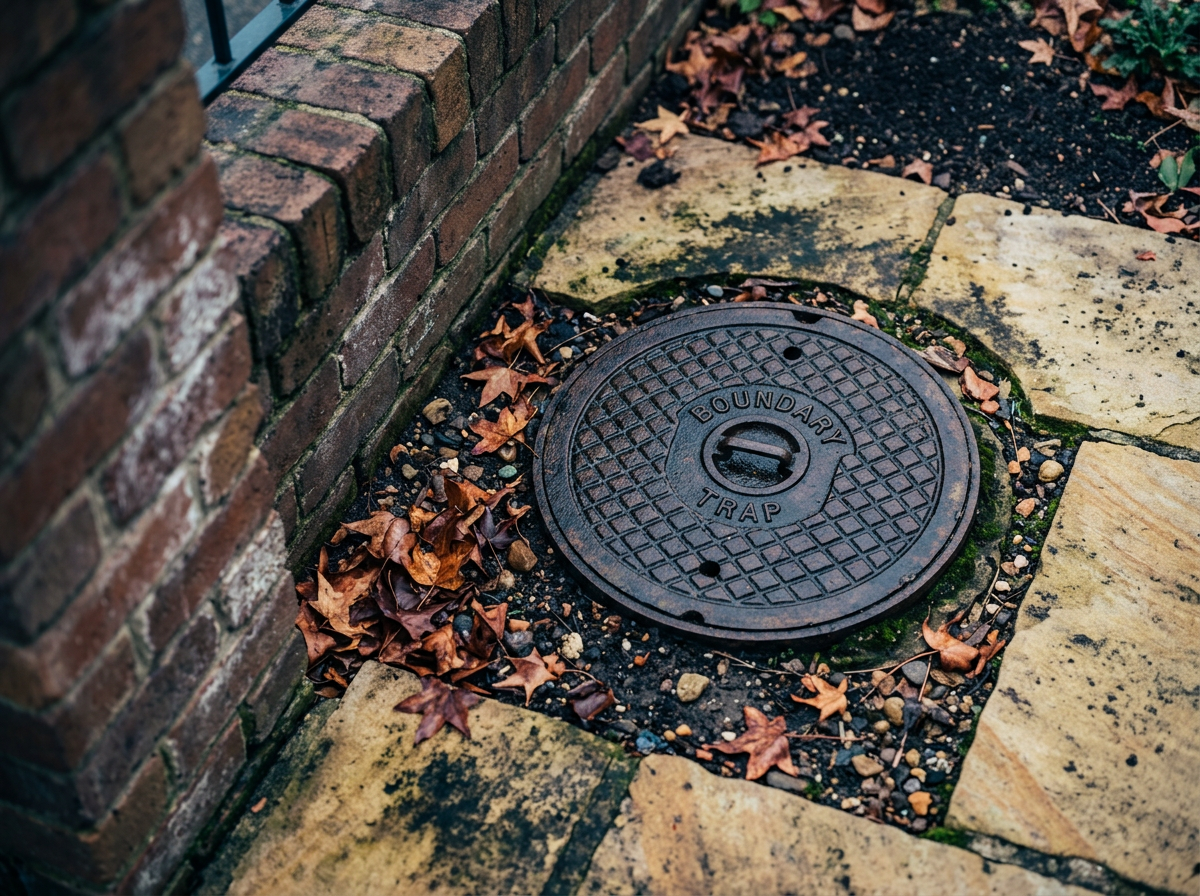
Walk down any street in Paddington, Mosman or Hunters Hill in late June and you will spot them once you know what to look for: a round cast iron lid set flush into a sandstone path, usually within a metre of the front fence. That is your boundary trap, and it is the single most important piece of plumbing on a Sydney property that almost no homeowner can name. We have spent this winter clearing dozens of them across the Lower North Shore, the Inner West and the Central Coast after one of the wettest Junes the Bureau of Meteorology Observatory Hill record has logged in years. When a boundary trap surcharges, raw sewage comes up through that lid before it backs up inside your house, which is exactly what it is designed to do. The problem is that most owners only learn the word "boundary trap" the morning they find one bubbling next to their letterbox. This guide fixes that. By the end you will know what a boundary trap actually does, why Sydney winters are its toughest test, what a clearing or replacement realistically costs in 2026, and exactly where the line falls between your bill and Sydney Water's.
What a Boundary Trap Actually Is (and Why Sydney Has Them)
A boundary trap, sometimes called a disconnector trap, is a U-shaped section of sewer pipe installed near the front boundary of your property where your private sewer line meets the Sydney Water main in the street. The U holds a permanent seal of water, much like the trap under your kitchen sink, but at a much larger scale. That water seal does two jobs at once. It stops sewer gases and odours from the public main travelling back up your line, and it acts as a relief point if the downstream main blocks, sending overflow up through the access cap rather than into your bathroom.
Sydney is one of the few major cities in Australia where boundary traps are still standard on most pre-2000 properties. Sydney Water has historically required them on residential connections to the gravity sewer network, and you will find them on almost every Federation terrace, inter-war bungalow and post-war brick veneer between the harbour and Hornsby. Newer estates on the urban fringe sometimes use a pressure sewer or an inspection shaft instead, but if your home was built before 2000 and connects to gravity sewer, you almost certainly have one.
How to Find Yours in Under Five Minutes
The fastest way to locate your boundary trap is to walk to the front of your property and look for a circular cap, usually 150 mm to 225 mm across, set into the ground within a metre or two of the front fence. On older homes it is often a brass or cast iron lid stamped with the words "BOUNDARY TRAP" or "SEWER". On newer rebuilds it may be a black plastic screw cap inside a small concrete surround.
If you cannot see one, three things are usually going on. The cap has been paved or turfed over by a previous owner, the trap sits inside a garden bed and is hidden by mulch, or the lid has corroded flush with the path and looks like a dark stain. Sydney Water's free property sewer service diagram shows the trap location on most metropolitan properties and is worth pulling before you start lifting pavers.
Why Sydney Boundary Traps Block Most Often in Winter
Across our service runs from Manly Vale to Wyong, boundary trap callouts climb sharply from late May through to early September. Three forces stack up at once. Soaked clay soils swell and put cyclic load on aged joints. Cold ground temperatures solidify any grease and fat moving through the line. Native and exotic tree roots, especially from liquidambars, camphor laurels and eucalypts, push harder toward leaking joints because the trap is the wettest point on the lateral.
The trap itself is also a natural collection point for anything heavy moving through the system. Wet wipes, sanitary products, cooking fats and the silt that washes in from a cracked upstream pipe all settle in the U before they reach the main. In summer the system has enough flow and warmth to keep most of it moving. In winter, with cooler temperatures and slower flows during the day, the same volume of debris compacts into a plug.
- Root intrusion at the trap joints, the most common cause on properties more than 40 years old.
- Wet wipe accumulation, which has overtaken grease as the leading single-item blockage in Sydney metro since 2022.
- Grease and fat solidification, sharpest in strata blocks and shared lines through Bondi, Zetland and Wollstonecraft.
- Silt and bark wash-in from cracked upstream pipes after East Coast Lows.
- Downstream Sydney Water main blockages, which surcharge through your trap as the system's safety valve.
The Warning Signs You Have Hours, Not Days
A boundary trap rarely fails without warning. The first signs usually appear inside the house two to seven days before the trap actually overflows, and they are easy to miss if you do not know what you are listening for. The pattern is consistent across the Sydney basin and worth committing to memory.
If you notice two or more of the signs below in the same week, the trap is already partially blocked. Calling a licensed drainer before it fully surcharges is the difference between a one-hour jetting job and a full yard clean down.
- Gurgling from the lowest toilet or floor waste in the house, especially when the washing machine drains.
- A faint sewer smell in the front yard after rain, strongest near the fence line.
- Slow-draining shower or bath even though every fixture seems clear individually.
- Water rising and falling in the toilet bowl when no one has flushed.
- A visible damp patch or dark wet ring around the boundary trap lid.
- Wastewater pooling on the path near the front gate after a storm.
What a Boundary Trap Clear or Repair Actually Costs in 2026
Costs have moved this year on the back of higher labour rates and the IPART-approved Sydney Water price rises rolling through 2025 and 2026. The good news is that most boundary trap blockages are still a single-visit fix. The numbers below are the typical ranges we are quoting across Sydney metro, the Central Coast and Newcastle in winter 2026.
Use these as a planning guide rather than a quote. The real driver of cost is depth and access. A trap sitting 600 mm down in a soft garden bed is a different job to one that has been paved over with a 150 mm concrete pad and a brick planter on top.
- Standard jet clearing of a blocked boundary trap: $280 to $480, usually 45 to 90 minutes on site.
- Jet clear plus CCTV inspection so you can see the cause: $480 to $780.
- Excavate and replace a single damaged trap section: $1,800 to $3,600 depending on depth and surface reinstatement.
- Trenchless pipe relining of the lateral through the trap: $3,500 to $7,500 for typical Sydney lot lengths.
- Full lateral renewal from the trap to the house: $6,000 to $15,000 on heritage properties with sandstone, established gardens or driveways to reinstate.
Who Pays, You or Sydney Water? The 2026 Responsibility Line
This is the question that costs Sydney homeowners the most money every winter, because the answer is misunderstood almost universally. The simple version is this. From the property side of your boundary trap back to the house, the pipe and the trap itself are your responsibility. From the trap forward to the Sydney Water main in the street, including the connection point, the pipe is Sydney Water's responsibility.
The trap is the dividing line. If the blockage is on your side of the trap, you pay. If it is in the Sydney Water main and is surcharging through your trap as the safety valve, Sydney Water clears it and may reimburse reasonable plumber callout costs if you had to investigate first. The exact policy is published on the Sydney Water blockages and overflows page, and it is worth reading before you sign any quote.
There is also a separate question of who is liable inside a tenanted property. Under standard NSW residential tenancy law administered by NSW Fair Trading, the landlord is responsible for the plumbing infrastructure including the boundary trap, but the tenant must report problems promptly. Our tenant or landlord blocked drain guide walks through the documentation steps that protect both sides.
What to Do in the First Ten Minutes of an Overflow
If you walk outside and find wastewater coming up around the trap lid, the priority is to stop adding load to the system while you wait for a drainer to arrive. Do not try to hose the overflow back down the grate. That moves contaminated water across the surface and can push the surcharge inside the house once pressure builds again.
- Stop using every fixture in the house, especially the washing machine, dishwasher and showers.
- Move anyone barefoot, children and pets away from the affected area. Treat the overflow as raw sewage.
- Take three or four time-stamped photos showing the trap lid, the surrounding area and any internal symptoms.
- Call a licensed drainer for an emergency callout. Our team responds across Sydney, the Central Coast and Newcastle service areas seven days a week.
- If the overflow is heavy and continuous, also report it to Sydney Water on 13 20 90 so they can check the main.
Prevention: The Six Things Sydney Homeowners Get Wrong
Most boundary trap failures we attend in winter were avoidable. The same six mistakes show up year after year, and fixing any one of them buys you significant insurance against the next East Coast Low.
- Paving over the trap lid during a landscaping job. If you cannot lift it in 30 seconds, a drainer cannot either, and the clearing job doubles in time and cost.
- Flushing wipes labelled "flushable". Independent testing by Choice has consistently shown they do not break down in the time it takes to reach your trap.
- Pouring cooking fat down the kitchen sink in winter. It cools fast inside the lateral and stops at the trap.
- Planting fig trees, liquidambars or camphor laurels within five metres of the trap. They are the three worst root offenders in the Sydney basin.
- Ignoring a slow gurgling toilet for weeks because it eventually clears itself. It is not clearing, it is rebuilding pressure.
- Skipping a CCTV inspection after buying an older home. Most blockages we clear in the first year of ownership were already present on the pre-purchase survey, the buyer just never commissioned one. Our buying a house drain check guide walks through what to ask for.
When Relining Beats Replacement on a Sydney Boundary Trap
Twenty years ago the only fix for a failed boundary trap section was to excavate, often through a sandstone path or an established garden bed, and rebuild the connection in PVC. Today, trenchless relining is the better answer on most Sydney properties because it preserves heritage surfaces and removes root intrusion at the same time. A CIPP (cured-in-place pipe) liner is drawn through the existing lateral and bonded to the inside of the pipe, creating a continuous new pipe within the old one with no joints for roots to enter.
Relining is not always the right call. If the trap itself has collapsed, if the lateral has dropped out of alignment, or if the pipe is so deformed that a liner cannot pass through, traditional excavation is still required. A camera inspection tells you which path you are on before any quote is signed. Our pipe relining vs replacement guide compares the two approaches in detail with Sydney-specific examples.
On heritage properties through the Inner West, the Eastern Suburbs and the Lower North Shore, the cost gap between excavation and relining has narrowed sharply because surface reinstatement on sandstone or tessellated tiles can run into the thousands on its own. For most owners, the trenchless option now wins on both time and total spend.
Frequently Misunderstood: Boundary Traps vs Inspection Shafts vs ORGs
Three different fittings sit near the front of a Sydney property and they get confused constantly. The boundary trap is the U-shaped fitting with a water seal at the front boundary. An inspection shaft is a straight vertical access pipe with no water seal, used on newer properties for camera inspection but with no overflow function. An overflow relief gully, or ORG, is a low gully outside the house that releases overflow into the yard if the main blocks, and it is usually fitted to homes without a boundary trap.
The difference matters because the diagnostic and the cost are different in each case. If you have an inspection shaft and no boundary trap, the safety valve is the ORG, not a front yard lid. Our Sydney Water vs homeowner responsibility article maps each of these fittings against the 2026 Sydney Water operating licence so you know exactly which one is yours.
Boundary trap surcharging? We respond across Sydney 24/7.
Express Drain Cleaning provides same-day drain clearing across Sydney, Newcastle and the Central Coast. Licensed, insured, upfront pricing.