

Sydney Strata Water Leaks 2026: Why Your Levies Just Jumped and How to Fight Back
If you opened a strata levy notice in Mosman, Chatswood, Zetland or Parramatta this quarter and felt the kind of small sting that makes you reread the line twice, you are not alone. Across Sydney apartment buildings from Bondi to Castle Hill, building managers are quietly funnelling the same complaint to plumbers like us: the bulk water meter is reading higher than the sum of the unit sub-meters, and the difference is showing up in everyone's levies. The cause is almost never new washing machines or longer showers. It is usually a slow, concealed leak somewhere in the common pressure line, made suddenly visible by Sydney Water's 1 July 2026 price step. This guide is for owners, tenants and committee members who want to know exactly what is happening, who pays, and how to claw money back before the next quarterly notice lands.
Why Sydney strata leaks suddenly became expensive in 2026
Strata water leaks are not new. Buildings have always lost a small amount of water to dripping common taps, weeping cistern valves in shared amenities, and the occasional pinhole in a riser pipe. What changed in 2026 is the price tag attached to that loss.
Sydney Water's pricing for the 2025 to 2030 period steps up on 1 July 2026, with the per kilolitre usage rate and the wastewater usage component both rising in real terms. For a single house, a slow leak is irritating. For a 40 unit building with bulk metering and a leak running 24 hours a day, the same percentage rise translates into thousands of dollars across a single billing cycle.
There is a second pressure point. Many Sydney strata schemes use sub-metering to split bills proportionally between lots. When the bulk meter overruns the sub-meter total, the difference defaults to the owners corporation under the common property column. That is why the leak shows up in levies instead of any single owner's account. The bigger the gap, the harder it is to ignore on the next quarterly statement.
What Sydney Water actually means by common property water use
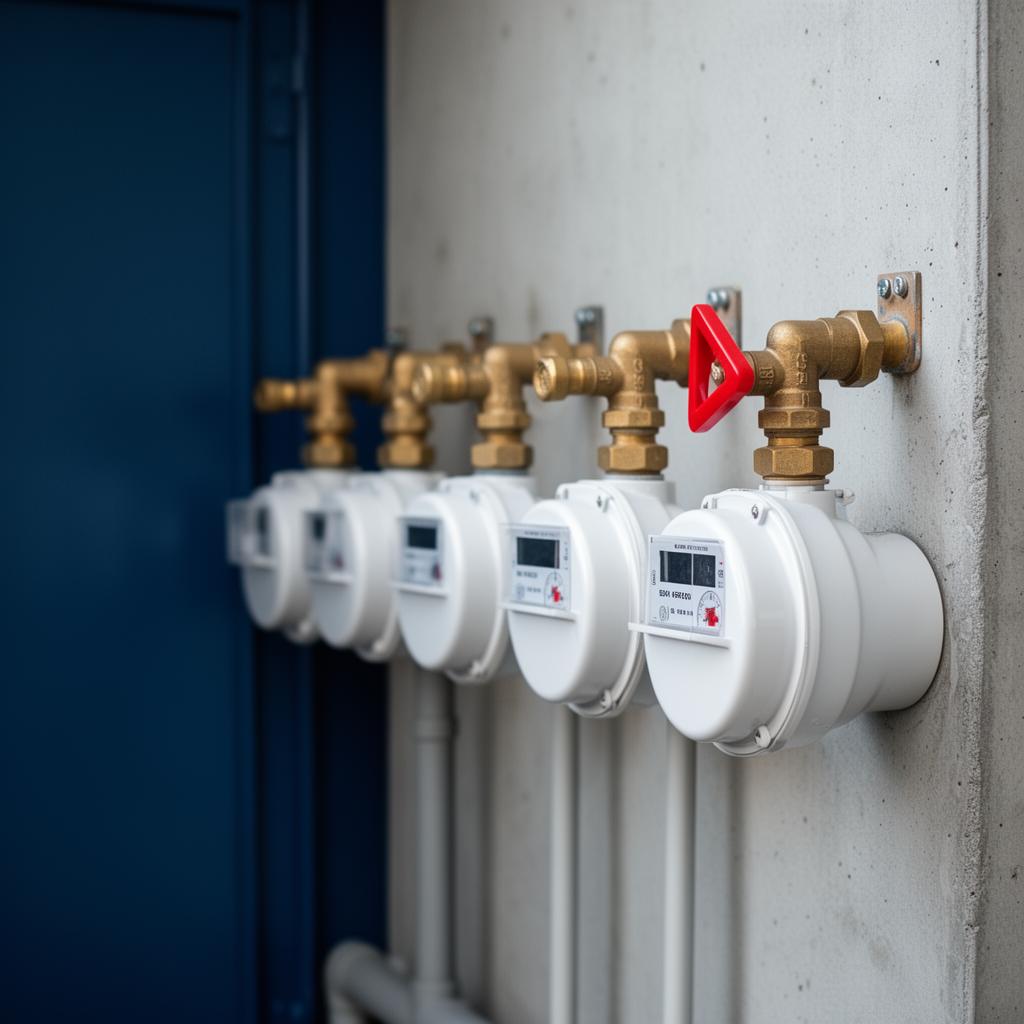
The Sydney Water account for most apartment buildings is held in the name of the owners corporation. The bulk meter at the boundary measures every drop entering the property, including water that flows into individual units. Sub-meters inside the building tell the strata manager how to split that consumption between lots.
Anything the sub-meters cannot account for is treated as common use. That bucket legitimately includes irrigation, common laundry, pool top-ups and tap testing. It also catches every concealed leak on the common pressure line, every dripping outdoor tap, and every running fire hose reel that nobody noticed.
Under the Strata Schemes Management Act 2015 in NSW, the owners corporation is responsible for maintaining common property, which includes the shared water supply pipework up to the point it enters an individual lot. The plain English version is simple. If the leak is in the riser, the basement pump room, the fire service or the garden irrigation, the body corporate pays for both the repair and the wasted water. Our Sydney Water versus homeowner guide covers the equivalent rules for standalone houses, where the boundary sits in a very different place.
Knowing which side of the boundary your leak is on changes everything about who pays. It also changes who can lodge the Hidden Leak Allowance application, which is covered further down.
The five places hidden leaks usually sit in a Sydney apartment building
Strata leaks are rarely dramatic. They are slow, quiet and almost always sitting in one of a handful of predictable spots. Knowing where to look first saves the body corporate hundreds of dollars in unnecessary investigation time.
- Cold water risers inside the wet wall stacks, especially in 1980s and 1990s buildings where the original copper is now over 30 years old.
- The bulk water meter assembly itself, where worn isolation valves can weep slowly into the meter pit and never show on a unit sub-meter.
- Garden irrigation solenoids and drip lines on common landscaping, which often run for hours overnight long after the system was meant to be switched off for winter.
- Pool top-up valves and pool backwash lines, where a stuck float can quietly add hundreds of litres a day to the bulk meter.
- Fire service test points and hose reels, where a partially closed isolation valve after annual testing can leave a small but constant flow.
The overnight test that will tell you if your building has a leak
Before anyone calls a plumber, the committee or strata manager can run a free diagnostic test that takes one night. The test only needs the bulk water meter, a torch, and a willingness to read four numbers carefully.
Pick a quiet weeknight. Ask residents through the noticeboard to avoid running the dishwasher or washing machine between roughly midnight and 5 am. At 11 pm, photograph the bulk meter face including the leak indicator triangle. Make sure every common tap is closed and the irrigation controller is paused for the night. At 5 am, photograph it again.
- Step 1: Notify residents in writing that a leak test is running overnight.
- Step 2: Confirm all common taps, irrigation and pool top-up valves are isolated.
- Step 3: Photograph the bulk meter face at 11 pm, including digits and leak indicator.
- Step 4: Photograph the bulk meter again at 5 am without anyone touching the system.
- Step 5: If the digits have moved by more than a few litres, or the leak indicator has rotated, the building has a continuous loss that needs professional investigation.
- Step 6: Save both photographs with timestamps. They become evidence later if a Hidden Leak Allowance application is lodged.
How professional leak detection works in a multi-storey building
Locating a leak inside a strata building is harder than in a house because the pipework runs vertically through wall cavities and slabs, often passing through three or four lots on the way down. A licensed leak detection plumber uses a layered approach rather than guesswork.
The first step is zoning. The technician isolates each riser at the basement using the existing stop valves and watches the bulk meter for the next 15 minutes. The riser that keeps the meter moving is the one with the leak. From there, acoustic listening equipment is walked up the riser, floor by floor, listening for the high frequency hiss of water escaping under pressure.
Thermal imaging cameras then confirm hot water leaks by reading the temperature difference through plasterboard or tiles. Tracer gas, a safe hydrogen and nitrogen blend, is injected into the suspect section and sniffed at the surface. Combined, these tools find around 95 percent of strata leaks without any exploratory wall opening. For the equipment cost side of the conversation, our breakdown of CCTV drain inspection pricing is a useful benchmark for what investigative plumbing work tends to cost in Sydney.
The Sydney Water Hidden Leak Allowance for strata schemes
The Sydney Water Hidden Leak Allowance is one of the most under-used tools available to NSW owners corporations. It is a rebate against the water usage charges caused by a genuinely concealed leak on the customer side of the meter, and it applies to strata accounts the same way it applies to a standalone house.
To qualify, the leak must be hidden from normal view. That means inside a wall cavity, under a slab, buried in landscaping, or otherwise impossible to detect without specialist equipment. A constantly running cistern in the common amenities does not qualify. A pinhole in a buried garden irrigation main absolutely does.
The application has to be lodged within 12 months of the repair date. Sydney Water requires a written report from a licensed plumber that names the leak location, the date of repair and the volume of water lost. The repair invoice must accompany the application. Sydney Water then credits the usage and wastewater usage charges above the building's historical average for the affected billing period.
Three details catch most strata committees out. The allowance does not refund the fixed service charges, only the usage charges. The historical average is calculated across recent comparable quarters, so a building that already had a smaller undetected leak last year may receive a smaller refund. And the application must be lodged by the account holder, which is the owners corporation, not an individual lot owner.
- Eligible: hidden leaks in common risers, slab penetrations, buried irrigation mains, concealed wall stacks.
- Not eligible: dripping shared taps, running cisterns in common amenities, visible pool top-up overflows.
- Required documents: licensed plumber's written report, repair invoice, photos of the meter readings before and after.
- Time limit: application lodged within 12 months of the repair date.
- Refund scope: water usage and wastewater usage charges above the building's historical average.
Renters in strata: who actually pays when the bill jumps
Renters in NSW strata buildings often assume a building wide water leak has nothing to do with them. That is sometimes true and sometimes not, depending on how the lease is written and how the building is metered.
Where a unit is separately sub-metered and the lease passes water usage through to the tenant, the tenant pays the usage portion of their own unit. The common property leak, by contrast, sits on the owners corporation bill and flows through to the landlord via levies. The landlord cannot legally pass that levy increase straight back to a sitting tenant during a fixed-term lease.
Where the building is not sub-metered and the landlord receives a single quarterly bill from the owners corporation, the tenant should not be charged anything for water usage unless the property meets the NSW water efficiency requirements. If a landlord is trying to pass through a strata leak surcharge during a tenancy, the renter has solid grounds to challenge it. The same principles play out in standalone houses in our tenant or landlord blocked drain guide.
What a strata committee should do in the next two weeks
Sydney Water reads most bulk meters quarterly. The meter face that ticks over tonight shapes the levy notice that lands in roughly three months. Acting in the next fortnight is the difference between catching a leak before the July 2026 price step bites and paying for it across the full first quarter of the new pricing period.
The fastest path forward is short. Run the overnight bulk meter test described above. If anything has moved, book a licensed leak detection visit and keep every photograph and invoice in one shared folder. Then ask the strata manager to flag the Hidden Leak Allowance application for the next committee meeting so the 12 month window is not lost.
- This week: schedule the overnight bulk meter test and notify residents in writing.
- This week: ask the building manager to walk every common tap, hose reel and irrigation valve for visible drips.
- This fortnight: if the test shows movement, book a leak detection inspection from a licensed Sydney plumber.
- Within 12 months of any repair: lodge the Hidden Leak Allowance application with the plumber's report and invoice attached.
- Every annual general meeting: review the last four bulk meter readings against the sub-meter totals to spot creeping losses early.
Worried your building has a hidden leak? Book a licensed Sydney strata leak detection visit this week.
Express Drain Cleaning provides same-day drain clearing across Sydney, Newcastle and the Central Coast. Licensed, insured, upfront pricing.