
Silent Toilet Leaks in Sydney: The Hidden $2,000 Winter Bill Trap Homeowners Miss in 2026
Cross the Anzac Bridge at 6am in the middle of a Sydney July and the city looks calm. Under half of those roofs, something is not calm at all. Sydney Water estimates that roughly one in four homes across the metropolitan network has a leaking toilet cistern, and almost none of the owners know about it until the quarterly bill lands. In the first billing cycles after the IPART Sydney Water price determination took effect on 1 October 2025, our office phones have been running hot with the same call from Willoughby, Hornsby, Erina and Newcastle. The bill has doubled, sometimes tripled, nothing in the house has changed, and no one can find a puddle. The answer is almost always sitting behind the closed lid of a toilet in a spare bathroom. A silent cistern leak can quietly move up to 260 litres of water a day into the sewer without a sound, without a stain and without a warning. Over a Sydney winter quarter, that is enough water to add close to $2,000 to a family bill and, in the worst cases, to slide a household over the water usage step that changes the rate you pay for every extra kilolitre. This guide walks a Sydney owner through how a silent toilet leak actually happens, how to find one in your home in under ten minutes, what a proper repair costs in 2026, what Sydney Water will and will not credit back, and when a leaking cistern is a warning sign of a much larger drainage problem. No jargon, no filler, just what a local drain plumber sees on the tools every week.
What a Silent Toilet Leak Actually Is
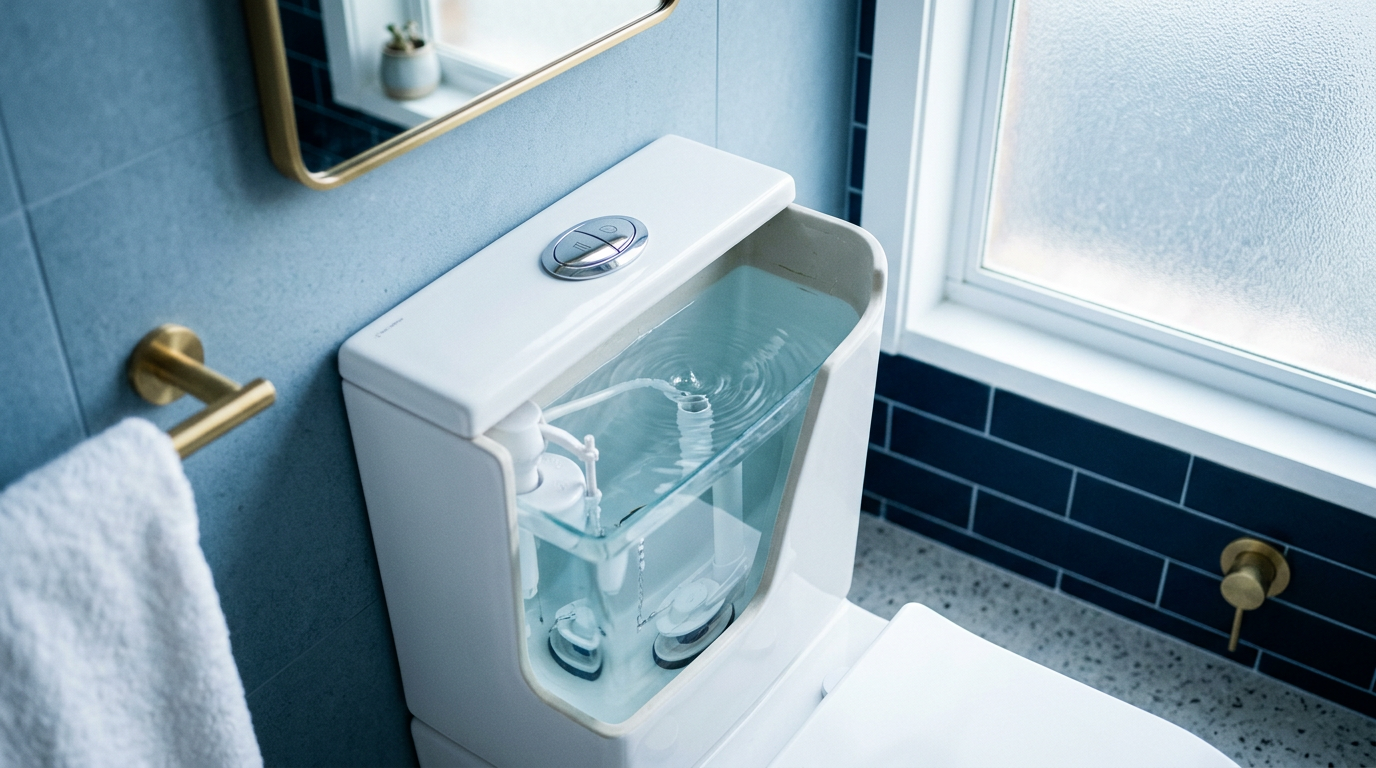
A silent toilet leak is water escaping continuously from the cistern into the pan without the flush button being pressed. On a dual-flush toilet that is fitted to almost every Sydney home built or renovated since the late 1990s, two rubber seals do all the work. The inlet valve closes off the mains water as soon as the tank refills. The flush valve, sometimes called the outlet washer or drop valve, sits on the floor of the cistern and seals the opening between the tank and the pan. When either part starts to fail, water keeps trickling from the tank into the bowl and straight down the sewer.
The reason it stays silent is simple. The flow is small, sometimes as fine as a thread of water running down the back of the pan, and it sits below the water line inside the bowl. There is no splashing, no dripping tap sound and no visible mark on the tile. Many of our Sydney customers have lived with a leaking cistern for six months or longer before an unusual bill or a whisper of running water in a quiet room finally gives it away.
The volume is not trivial. A moderate flush valve leak on a standard 6/3 litre cistern typically wastes between 60 and 120 litres a day. A fully failed washer can push past 260 litres a day, more than a standard family of four uses for every shower, tap and wash combined. On the current post-October 2025 Sydney Water tariff, that steady loss lands squarely inside the higher usage tier and is charged at the top marginal rate.
Why Sydney Toilets Fail More Often in Winter
Toilet cisterns fail more often in a Sydney winter than a Sydney summer for reasons that have nothing to do with the toilet and everything to do with the water inside it. Warragamba Dam water arrives cooler in June and July, which contracts the rubber flush washer just enough to break the perfect seal it held during summer. At the same time, colder mornings inside the bathroom mean rubber components sit at a lower temperature for longer, so any small deformity in the seal has time to set in place.
The bigger factor is water pressure. The Sydney Water network runs at higher inlet pressures through winter because household demand drops. That extra pressure pushes on a tired inlet valve and slowly wears the diaphragm inside. On homes fitted with the flat-face rubber outlet valves that were standard in Australian toilets between 2005 and 2015, we replace at least one a week on a normal winter callout run through the Central Coast.
Add one more piece of local context. The bore-recharged and reservoir-blended supply into the Northern Beaches and parts of the Lower North Shore carries a slightly different mineral profile, and calcium build-up on the flush seat is visibly worse in those postcodes. Once mineral scale sits on the seat, no rubber washer will ever seat flush against it again, and the leak begins.
How to Find a Silent Toilet Leak in Under Ten Minutes
You do not need a plumber to detect a silent toilet leak. You need three things, all of which are in most Sydney households already: food colouring, ten minutes of quiet, and a torch.
Start by lifting the lid of the cistern and setting it carefully aside on a towel. Ceramic lids are brittle and expensive to replace. Squeeze six to eight drops of dark food colouring into the water inside the tank. Blue or green shows up best against white ceramic. Put the lid back on and walk away for at least ten minutes. Do not flush during this window, and if there are children or housemates in the property, tell them not to.
Come back and look inside the bowl with a torch. If any colour has appeared in the pan water, the flush valve is leaking. There is no other way for coloured water to reach the pan without a physical breach of the seal. A pale tint means a slow leak, probably 20 to 60 litres a day. A clearly coloured bowl means a moderate to severe leak, often over 100 litres a day. Test every toilet in the house, including guest bathrooms, ensuites in unused rooms and any second-storey powder room. In every large Sydney home we service, the leak is almost always in the toilet the family never uses.
Use Your Water Meter as a Second Check
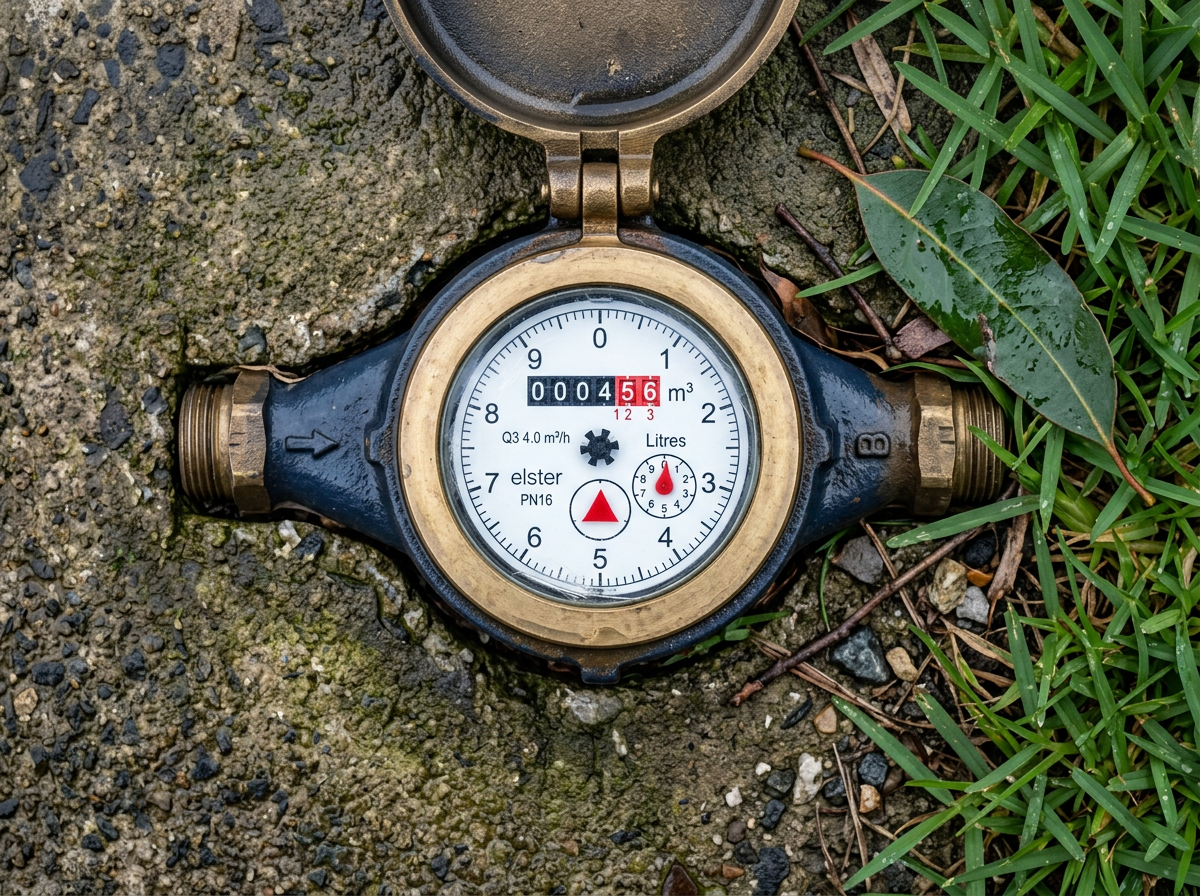
The food colouring test finds a leaking cistern. Your Sydney Water meter will confirm the size of the total leak load on the property, which matters if there is more than one leak or if a slab plumbing issue is masking as a toilet issue.
Find the meter, which is almost always inside a small concrete box near the front boundary. Lift the lid and look for the small red or black triangle set inside the main dial face. This is the low-flow leak indicator, and it will spin visibly under a flow as small as 6 litres an hour. Turn off every tap in the house, do not run the dishwasher or washing machine, and watch the triangle for two minutes. If it moves at all with the house at rest, water is escaping somewhere on your side of the meter. If it stops moving when you close the isolating valve on the wall behind the leaking toilet, you have confirmed the source in a minute.
Sydney Water publishes a short reference guide on this in its own leak detection resources, and every licensed plumber in Sydney uses the same test on every job. Get in the habit of checking the meter once a quarter, on the day the bill arrives. It is the cheapest early warning system a homeowner will ever run.
What a Toilet Cistern Repair Actually Costs in Sydney in 2026
The parts inside a modern dual-flush cistern are cheap. The labour to fit them properly on a busy Sydney service run is where the real cost sits, and there are three tiers a homeowner should understand before booking a call.
A straightforward flush valve or inlet valve replacement on a standard cistern fitted to a name-brand pan sits between $180 and $320 in Sydney and on the Central Coast in 2026. This covers a call-out, one hour on site, a new Caroma or Fowler washer kit and a full function test. If the cistern is older than about 15 years and the internal thread has corroded, we often replace the whole cistern for between $450 and $650 fitted, which is more cost effective than repeating a partial repair every two years.
The cost lifts if the toilet is a concealed in-wall unit, common in newer Willoughby and Chatswood apartments and any post-2015 ensuite renovation. The button plate, the access panel and sometimes the plasterboard have to come off to reach the flush unit, and a proper repair runs between $380 and $780 depending on the panel design. Older water-hammer arrestor issues on high pressure Sydney mains can add another $120 to $180 if a mini limiter has to be fitted at the wall stop to protect the new valve. Any properly licensed Sydney plumber will quote the full fixed price up front.
When a Silent Toilet Leak Is Actually a Bigger Drainage Problem
In roughly one job in ten across our Sydney service run, the silent toilet leak we get called out to fix is not the real problem. It is a symptom of something worse happening further down the drain, and a repair that ignores the underlying cause will fail again inside a season.
The first pattern is a partially blocked sewer branch downstream of the toilet. When the drain cannot swallow a full 6-litre flush cleanly, the flush valve can be forced back open by the resulting hydraulic bounce, and the toilet slowly refills after every flush cycle. You will notice slow drainage from a nearby shower, gurgling from the floor waste when the toilet flushes, or a faint sewer odour in the room. A CCTV drain camera inspection will find the root intrusion or grease band inside 20 minutes.
The second pattern is a failing flexible connector hose or wall stop under the pan, which drips onto tile grout and vanishes into the subfloor. This one is silent, hidden and slow, and it will not show any water in the pan test. It shows on the meter test as a steady low flow long after the isolating valve to the toilet is closed. Any Sydney home with a first-floor bathroom sitting above living space should have these connectors visually inspected once every five years, and replaced whenever the pan is lifted for any reason. Left alone, these are the single most common cause of ceiling stains, warped floorboards and eventually the Sydney insurance claims our office sees during winter storm season.
Can You Claim a Toilet Leak on the Sydney Water Hidden Leak Allowance
This is the question homeowners ask most often, and the honest answer is: usually not, but sometimes yes. The rules are clear once you read them properly.
Sydney Water offers a hidden leak allowance that credits a portion of your bill when a plumber has found and repaired a hidden leak on your side of the meter. The word that matters is hidden. To qualify, the leak must not be one that a reasonable owner could have detected with normal use of the property. A cistern that was audibly hissing, a bowl that clearly refilled by itself, or a toilet the household used every day and could see running, will not qualify. A stuck flush valve on a toilet in an unused ensuite that only reveals itself through a water meter check often does.
Practical rule of thumb from our office. If the food colouring test needed to prove the leak in the first place, and the toilet is in a room the household does not use daily, you have a reasonable case for the allowance. Ask your plumber for a written report on the letterhead showing the fault, the parts replaced, the date, and the licence number. Submit that with the Sydney Water application within four months of the repair. For strata properties, the same rules apply but the owners corporation manager makes the claim through the bulk-meter account, not the individual lot owner.
Preventing the Next Silent Leak Before Next Winter
Once a Sydney household has been through one $2,000 quarterly bill, the goal shifts to never seeing another. Three habits stop almost every silent toilet leak we service.
First, run the food colouring test on every toilet in the house on the first of April, July, October and January. Set a reminder in your phone. It costs nothing, takes ten minutes for the whole house, and catches a slow leak before it doubles a bill. Second, replace the flush valve washer on any toilet older than eight years even if it appears to be working. It is a $12 part, and a proactive swap is far cheaper than the water it will one day quietly waste. Third, listen to your house at 10pm when the fridge cycles off. A faint hiss from a bathroom on a still winter night is almost never the wind. It is a cistern topping itself up because the seal below is passing.
For any Sydney property with more than two bathrooms, or any owner-occupier heading into a winter overseas trip, we recommend fitting a whole-of-property flow limiter with an automatic overnight shutoff. Modern units can be retrofitted at the meter for between $650 and $1,100 installed. The unit closes the water supply automatically at a set time each night and reopens at dawn. It is the single most effective piece of insurance against a silent toilet leak turning into a flood while a house sits empty.
Suspect a Silent Leak? Book a Fixed-Price Toilet Cistern Check Today
Express Drain Cleaning provides same-day drain clearing across Sydney, Newcastle and the Central Coast. Licensed, insured, upfront pricing.