
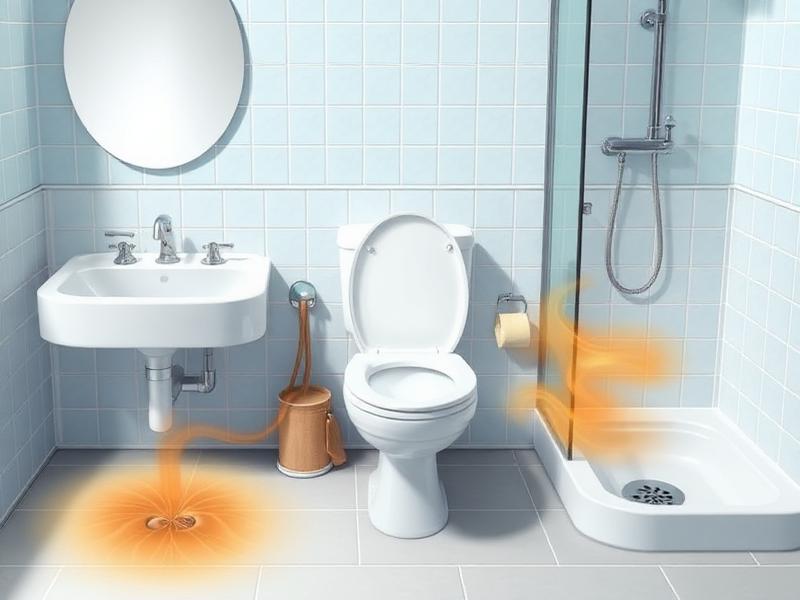
Why Your Bathroom Drain Smells: Causes and Solutions for NSW Homeowners
Stepping into your bathroom only to be greeted by a pungent, swampy odour is more than just an inconvenience; it is often a sign of a deeper plumbing issue. Across Sydney’s inner-west terraces, Newcastle’s seaside cottages, and the growing estates of the Central Coast, bathroom drain smells are a frequent complaint. Whether it's a dry trap in an older home or a bacterial buildup in a modern ensuite, understanding why your bathroom drain smells is the first step toward reclaiming a fresh environment. This guide explores the most common culprits found in local NSW properties and provides four practical, professional fixes to resolve the issue for good.
Common Culprits: Identifying Why Your Bathroom Drain Smells
In the coastal corridor between Sydney and Newcastle, we see a variety of plumbing architectures. Older homes in suburbs like Hamilton or Balmain often feature earthenware pipes that are prone to vertical cracking, allowing sewer gases to escape into the wall cavities. In contrast, newer builds in the Central Coast often struggle with 'biofilm'—a stubborn layer of bacteria that thrives on the soaps and shampoos used in modern showers.
Another frequent cause is the dry P-trap. If you have a guest bathroom or a floor waste that rarely sees water, the protective water seal evaporates. Without this barrier, the direct scent of the Sydney Water or Hunter Water sewer main can drift up into your home. This is particularly prevalent during hot NSW summers when evaporation rates are high.
- The Dry P-Trap: The U-shaped pipe under your floor holds water to block sewer gas. If unused, this water evaporates.
- Biofilm Accumulation: A cocktail of soap scum, hair, and skin cells creates a bacterial slime that clings to PVC pipes.
- Sewer Gas Leaks: Cracked vent pipes or perished seals around the base of the toilet (common in older Sydney builds).
- Partial Blockages: Minor clogs that haven't fully backed up yet but are decaying within the pipe.
Fix 1: Rectifying the Dry Trap and Biofilm Build-up
The simplest fix for a smelly bathroom drain is often the most overlooked. If the smell is a 'rotten egg' odour, start by flushing every floor waste and shower drain with at least two litres of water. This recreates the water seal in the trap. To prevent future evaporation, a teaspoon of cooking oil can be added to the drain to create a film on the water surface, though this is only a temporary measure for holiday homes.
For biofilm—which smells more like 'musty decay'—avoid harsh caustic cleaners from the supermarket, as these can damage the glue in PVC joints. Instead, use a mix of half a cup of baking soda followed by half a cup of white vinegar. Let it fizz for ten minutes, then flush with boiling water. This breaks down the organic matter clinging to the 'dropper' pipe without corroding your infrastructure. If the smell persists, you may need a professional 'jetter' clean, which typically costs between $250 and $450 depending on the depth of the buildup.
Fix 2: Inspecting and Replacing the Wax Seal or Pan Collar
If the smell is persistent and seems to come from the floor rather than the sink, the culprit may be the seal at the base of your toilet. In many older Sydney terraces, the 'pan collar' (the connector between the toilet and the sewage pipe) can perish over time. This allows sewer gas to bypass the water trap and enter the room.
You can test this by sniffing around the base of the toilet. If the silicone or mortar seal is cracked, it needs to be replaced. A licensed plumber will need to lift the toilet, replace the rubber seal or wax ring, and re-seat the fixture. For a standard toilet in the Newcastle or Central Coast area, expect to pay between $300 and $600 for this service, including parts and labour. This is a critical fix, as leaking sewer gas contains hydrogen sulfide, which is unpleasant and unhealthy in confined spaces.
Fix 3: Clearing the Boundary Trap and Vent Stacks
Sometimes the problem isn't inside the bathroom, but on your roof or at the edge of your property. Every home in the Sydney Water or Hunter Water network has a vent stack—a vertical pipe that allows sewer gases to escape safely above the roofline. In bushy suburbs like Wahroonga or Kariong, these vents often become blocked by bird nests or leaves. When the gas can't go up, it gets pushed back down through your bathroom drains.
Additionally, the 'boundary trap' (the point where your home's pipes meet the council main) can become partially blocked by tree roots. Fig trees and lilly pillies are notorious in NSW for seeking out moisture in old clay pipes. If your bathroom smells and you notice the water level in the toilet fluctuating or 'gulping' when you run the shower, the vent or boundary trap is likely the issue. Clearing a boundary trap of roots usually requires a motorised drain snake or a high-pressure water jetter, typically costing $350 to $550.
Fix 4: CCTV Pipe Inspection for Hidden Damage
When DIY flushes and simple repairs fail, the issue is likely structural. This is common in areas with reactive clay soils, such as Western Sydney, where ground movement can cause pipes to belly or snap. A 'bellied' pipe is one that has sagged, creating a permanent pool of stagnant waste that rots and smells, even if the drain isn't fully blocked.
A professional CCTV pipe inspection is the only way to diagnose this without digging up your tiles. A plumber will feed a waterproof camera down the line to identify cracks, sags, or invasive roots. For a standard residential property on the Central Coast or in Sydney, a CCTV inspection and report cost roughly $200 to $400. Knowing exactly where the damage sits saves you thousands in unnecessary excavation costs and ensures the smell is fixed at the source rather than just masked.
Don't let a smelly drain ruin your home. Get a professional inspection today.
Express Drain Cleaning provides same-day drain clearing across Sydney, Newcastle and the Central Coast. Licensed, insured, upfront pricing.